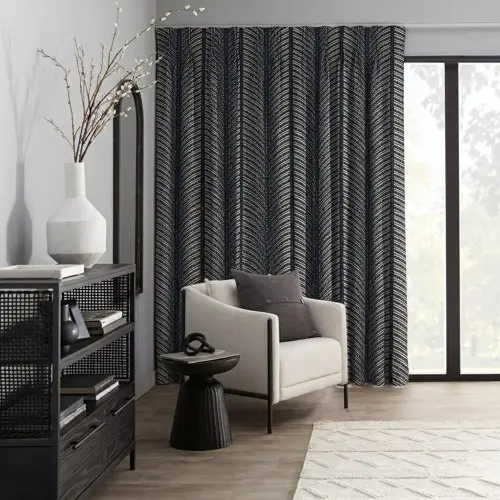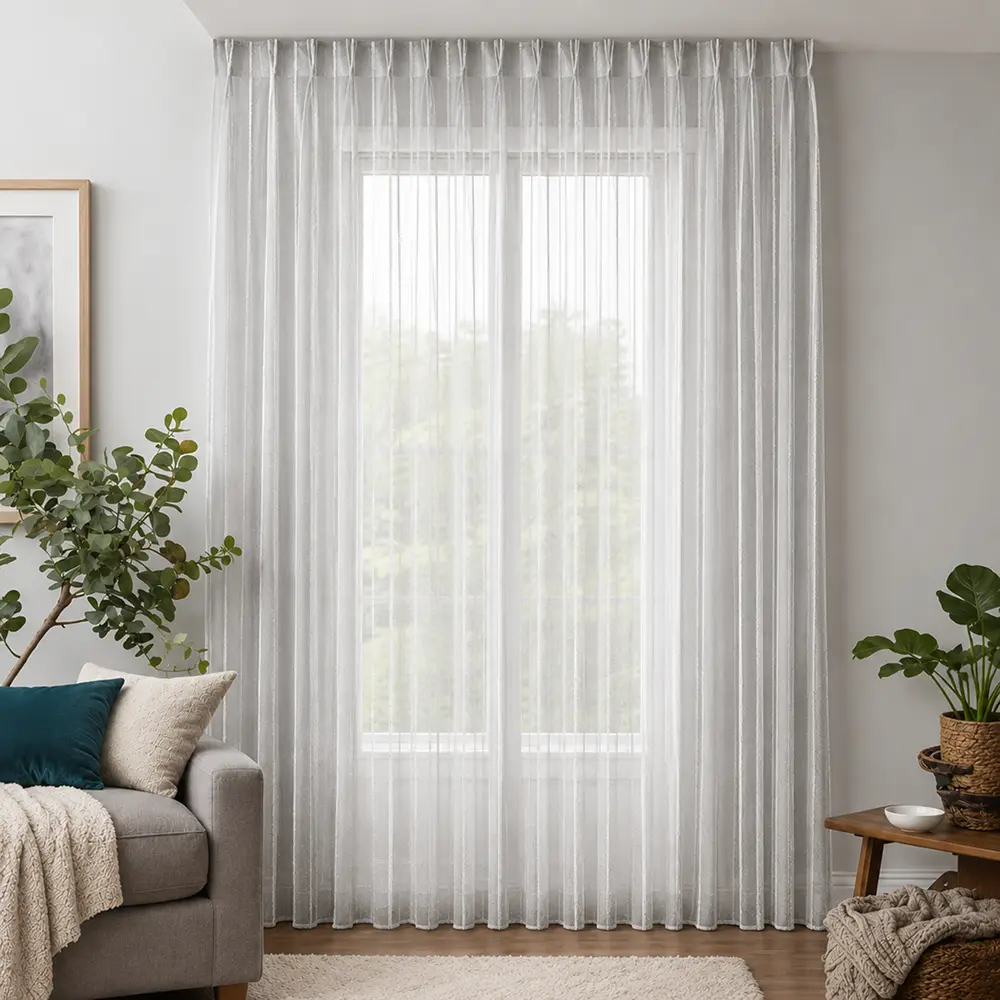
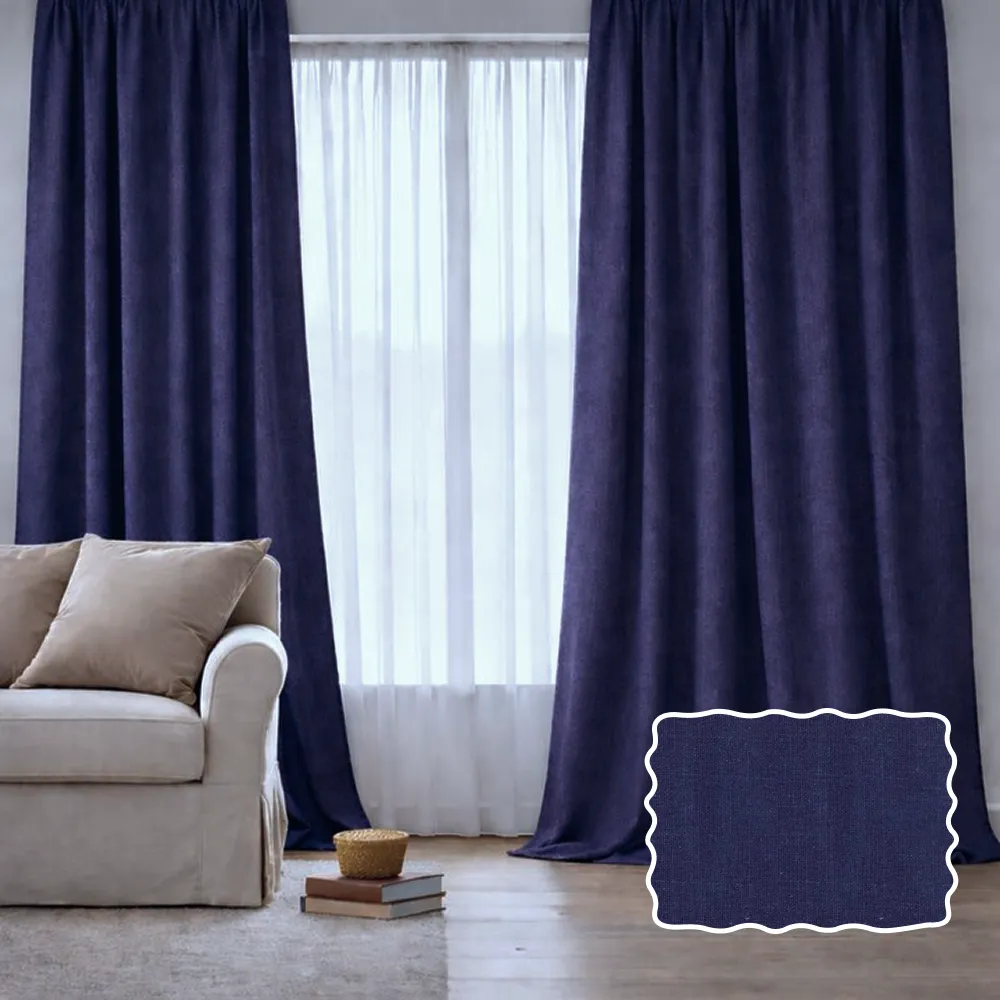
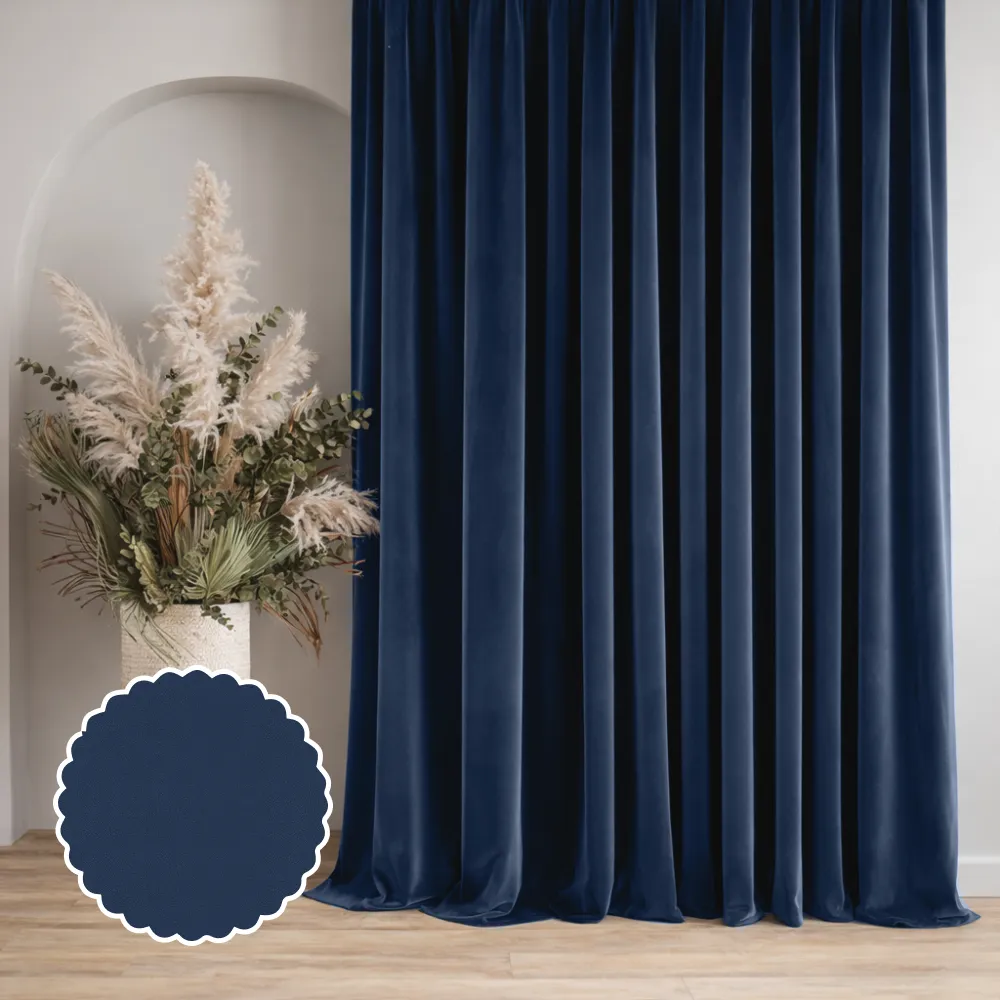
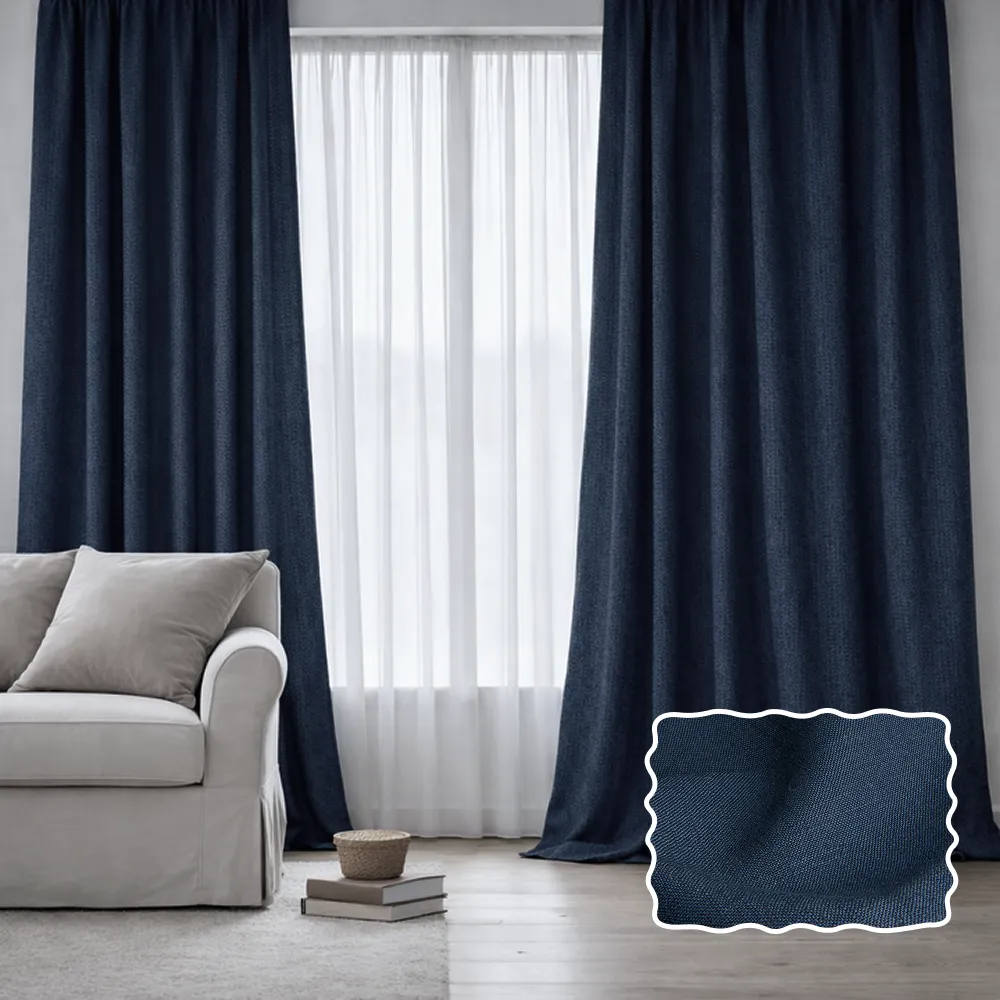
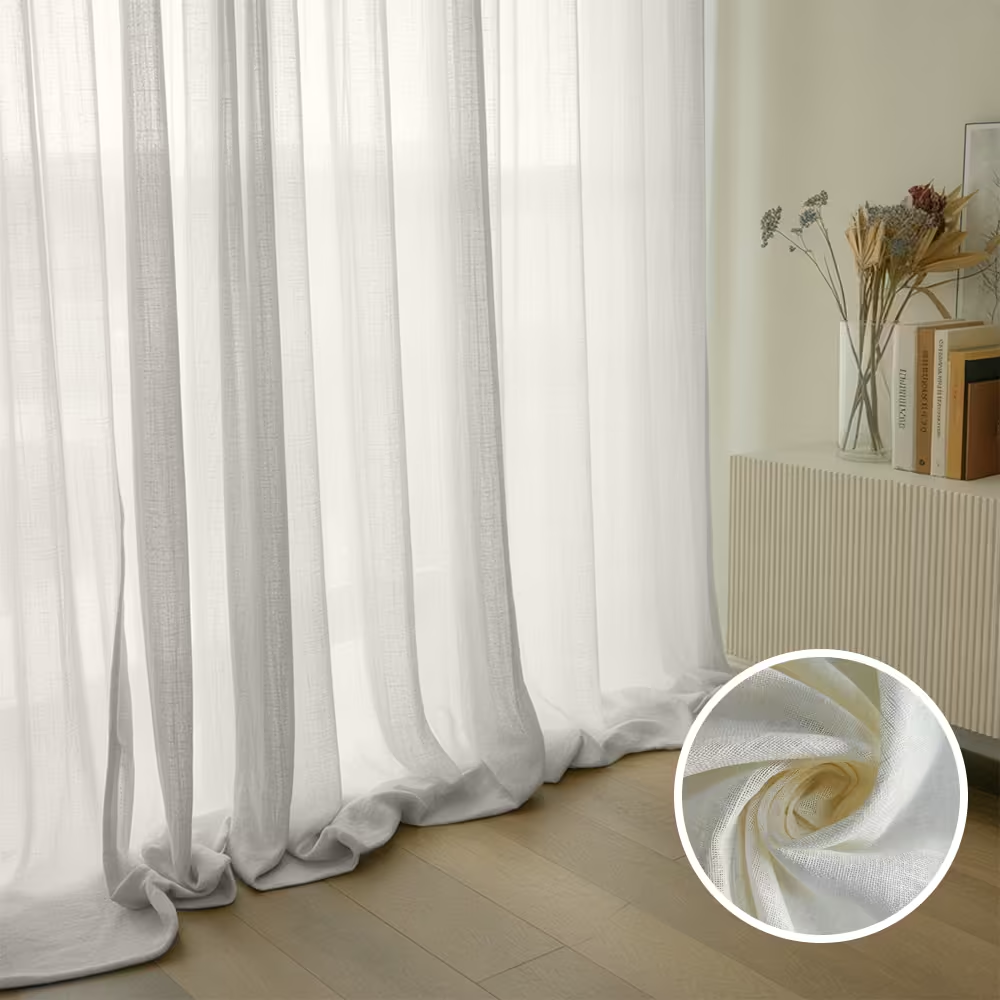
Pinch pleat curtains represent the most traditional and formal end of the curtain making craft — and in Dubai's premium residential sector, they remain the heading style of choice for clients who want their windows dressed to a genuinely luxurious standard rather than a functional approximation of luxury.
The defining characteristic of pinch pleat curtains is the individual pleat group — fabric pinched together at the base and fanned out above, creating a three-dimensional heading profile that stands away from the track rather than lying flat against it. Triple pinch pleat (three fabric folds per pleat group) is the most formal option and requires the most fabric; double pinch pleat and single goblet pleat offer slightly more relaxed versions of the same structured aesthetic.
What distinguishes a well-made pinch pleat curtain from a mediocre one is the consistency of the pleat spacing and the quality of the stitching that holds each pleat in position. Every pleat in our curtains is hand-stitched by experienced curtain makers — a detail that is invisible unless you look closely, but that determines whether the heading holds its shape over years of use or begins to sag and distort within months.
The fabric requirements for pinch pleat are more generous than any other heading style: 2.0–2.5 times the track width in fabric width across both panels. This means a 2.5 metre window might require 5–6 metres of fabric per panel pair — significantly more than an eyelet or pencil pleat curtain in the same space. The result, however, is a density and richness of drape that lighter headings cannot replicate.
In Dubai's luxury property market, pinch pleat curtains are consistently specified in show apartments, hotel suites, and premium residential developments as the standard against which other heading styles are measured. They photograph exceptionally well, hold their shape over time without needing to be re-dressed, and immediately signal a level of interior quality to anyone who enters the room.