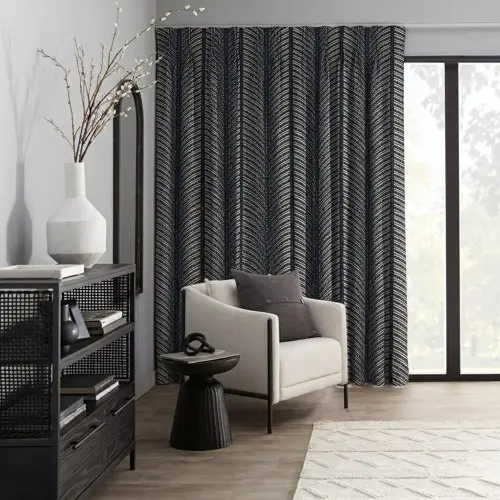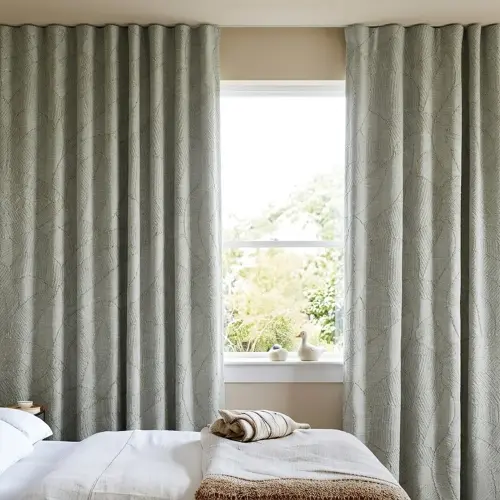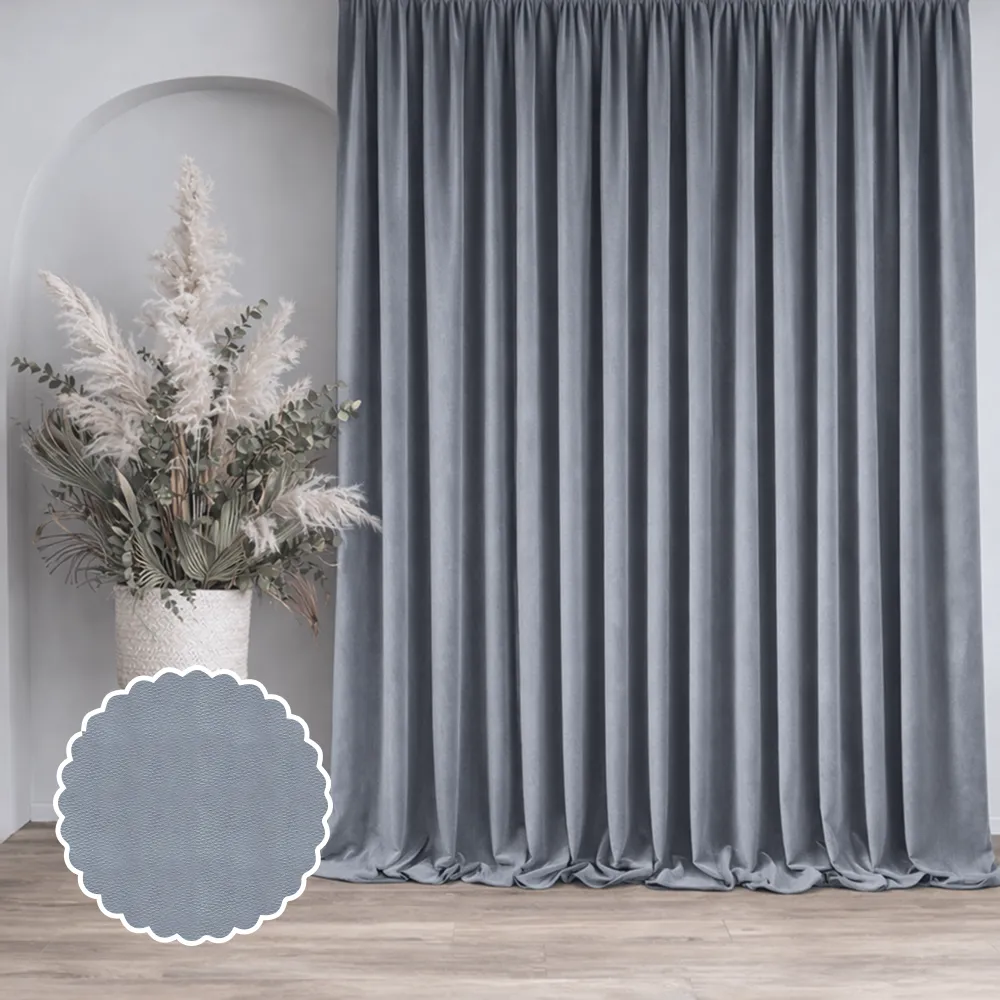
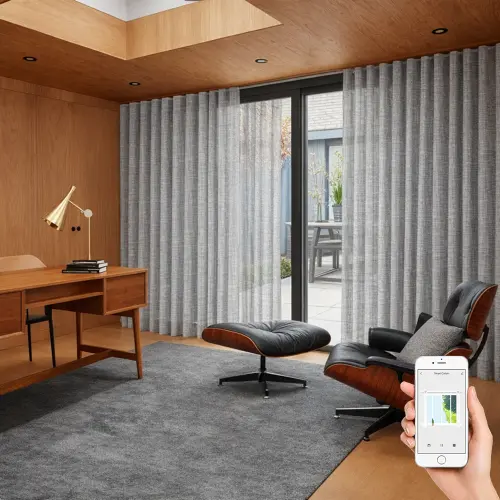
Motorized curtains are the fastest-growing category in Dubai home furnishings — driven by floor-to-ceiling windows, smart home integration, and the genuine convenience of app and voice control.
Why Dubai Homes Are Built for Motorized Curtains
Dubai's residential architecture has created conditions where motorized curtain systems are not a luxury — they are a practical response to the way homes are designed and used. The prevalence of floor-to-ceiling glazing in Marina apartments and penthouse units, the 3m+ ceiling heights standard in newer developments across Downtown and Business Bay, and the large sliding glass doors opening onto balconies in JBR and Palm villas all create window configurations that are genuinely impractical to operate manually on a daily basis.
A single curtain panel for a 3.5m wide floor-to-ceiling window in a Dubai Marina apartment can weigh 4–7kg depending on the fabric. Drawing it manually multiple times a day — particularly in heavier blackout or velvet fabrics — creates real wear on the fabric, the track, and the person drawing it. A motorized system eliminates this entirely, extending the lifespan of both the fabric and the hardware while adding convenience that residents consistently describe as one of the most appreciated upgrades in their home.
The second driver is smart home integration. Dubai has among the highest smart home penetration rates in the region, with a significant proportion of new-build apartments in developments like Emaar Beachfront, Creek Harbour, and Dubai Hills wired for KNX or similar building automation systems. Motorized curtains that integrate with these systems — and with consumer-level smart home platforms like Amazon Alexa, Google Home, and Apple HomeKit — are a natural addition to homes already managing lighting, air conditioning, and security through a single interface.
How Motorized Curtain Systems Work
A motorized curtain system has three components: the track (a steel C-rail in most wave systems, or a standard rod in some retrofits), the motor unit (embedded in or attached to the track, pulling the curtain carrier along a toothed belt or cord), and the control system (remote, app, wall switch, or smart home integration). The motor draws power from either the mains (wired installation) or an internal battery/rechargeable pack (wireless installation).
The track carries the curtain through a set of gliders or carriers that clip onto the wave tape at the top of the fabric. When the motor activates, the belt moves and the carriers travel the length of the track, drawing the curtain smoothly and consistently across the full span. A quality system achieves a smooth, silent operation that opens or closes a 4m curtain in 20–30 seconds with no jerk or stall.
Limits are programmed into the motor to define the exact open and closed positions — the curtain stops precisely at the same point every time it closes, eliminating the uneven gaps and edge light bleed that manual drawing causes. For blackout applications, this precision is essential: a motorized track properly set with accurate limits achieves a more consistent blackout seal than any manually operated system.
Motor Types: Wired, Battery, and Rechargeable Systems
Wired motors are the professional standard for permanent installations. A low-voltage cable runs from the motor unit to a transformer (typically concealed in the ceiling void or a wall cavity), powered from a standard 220V supply. Wired systems are silent, reliable, and maintenance-free — the motor never needs charging, never runs out of power at an inconvenient time. Installation requires an electrician to route power to the track position, which is most practical during a refurbishment or new-build fit-out. In established properties, cable routing can usually be concealed within a plaster cove or behind ceiling cornices.
Battery-powered motors use a self-contained battery pack housed in the motor body. They require no wiring and can be installed in any existing property without electrical work — making them the most popular choice for retrofit installations in occupied Dubai apartments. Battery life is typically 6–18 months depending on usage frequency and the size of the panel being moved. Replacement is straightforward: the motor body is removed, batteries replaced, and re-installed. The constraint is that batteries must be replaced before they fully drain — a fully discharged motor in the closed position with no power to open it is an avoidable inconvenience.
Rechargeable motors combine the wireless installation benefit of battery systems with the convenience of USB-C or micro-USB charging — the same cables used for phones and tablets. The motor charges from a standard power bank or USB outlet, and a full charge typically lasts 3–6 months. Rechargeable systems are the fastest-growing category in Dubai's smart home market because they eliminate battery replacement without requiring permanent wiring. The motor is removed from the track, charged, and reinstalled — a 10-minute process.
App, Voice, Remote, and Schedule Control in Dubai Homes
Modern motorized curtain systems in Dubai support multiple simultaneous control methods, and most residents use a combination depending on context. The available options are:
Smartphone app control — dedicated manufacturer apps (Somfy TaHoma, Dooya, Silent Gliss) or third-party smart home apps (Amazon Alexa, Google Home, Apple Home) allow curtains to be controlled from anywhere with an internet connection. This means closing bedroom curtains from the office before a delayed flight, or checking that curtains are drawn before leaving the property — genuinely useful in Dubai's high-mobility lifestyle.
Voice control — integration with Amazon Alexa or Google Assistant allows voice commands: "Alexa, open the living room curtains" or "Hey Google, close all the curtains." In Dubai's smart home market, this is one of the most-used control methods in properties where multiple users (family members, domestic staff) operate the system throughout the day.
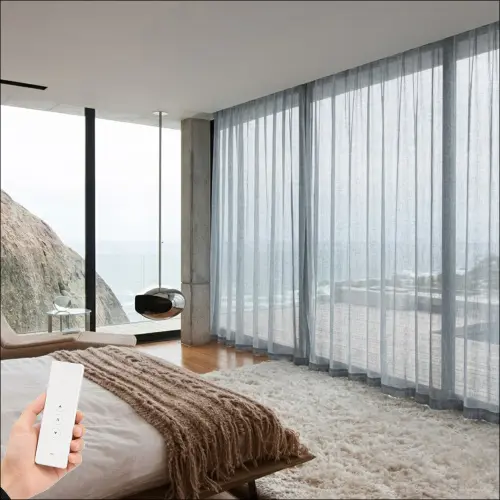
RF remote control — a physical remote that operates curtains within radio frequency range (typically 30m), without requiring internet connectivity. Remotes can control individual curtains or groups, and are the preferred control method for many residents in scenarios where phone or voice control is not convenient. For bedrooms, a beside-table remote is often the most practical solution for daily use.
Schedule automation — programming curtains to open and close at specified times. For Dubai bedrooms, the most popular automation is opening curtains 15 minutes after the resident's phone alarm, and closing them 30 minutes after sunset. This single automation represents one of the highest-rated smart home features among Dubai residents who have experienced it.
Motorized Curtain Costs and Installation in Dubai
A complete motorized curtain installation in Dubai (fabric, wave track, motor, and control system) for a standard living room window (3m wide, 2.8m drop) typically costs AED 3,000–5,500. The range reflects motor type (battery vs rechargeable vs wired), fabric specification (linen, blackout, velvet), and the complexity of smart home integration required. A single bedroom window with a rechargeable motor and no smart home integration is at the lower end; a full living room span with wired motor and KNX integration is at the upper end.
Installation typically takes 2–4 hours for a single window, including track fitting, motor programming, limit setting, app setup, and testing. Our team handles the full installation — we coordinate with any building access requirements, conceal cables where possible, and test all control methods before leaving. For properties requiring electrical work to route power to wired motors, we work alongside a licensed UAE electrician — we can make the introduction if required.
- Dubai's floor-to-ceiling windows and 3m+ ceiling heights make motorization practically useful, not just a luxury
- Wired motors are the professional standard for permanent installations — silent, reliable, and maintenance-free
- Rechargeable motors are the best retrofit option for occupied properties — USB-C charging, no wiring required
- Schedule automation (curtains opening with your alarm, closing at sunset) is the highest-rated smart home feature among Dubai residents
- A complete motorized installation for a standard Dubai living room window costs AED 3,000–5,500
- Motorized systems achieve better blackout precision than manual — limit programming stops the curtain at exactly the same position every time
Frequently Asked Questions
Get Expert Advice at Your Home — Free
Our specialist brings samples, measures every window, and gives you a written quote — no obligation.