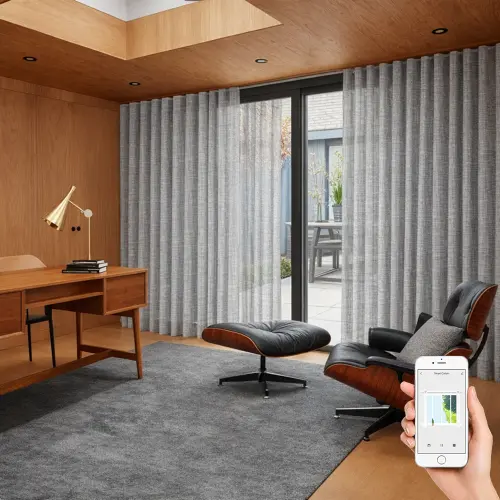
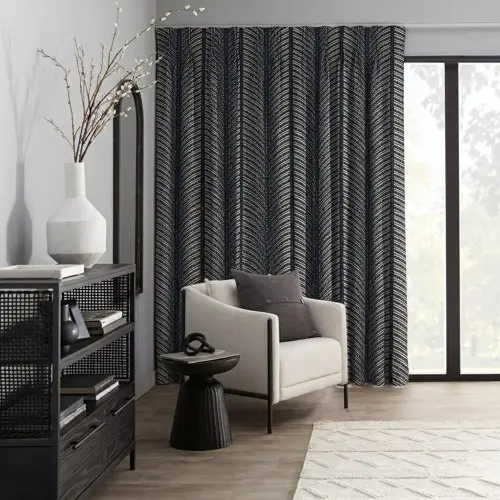
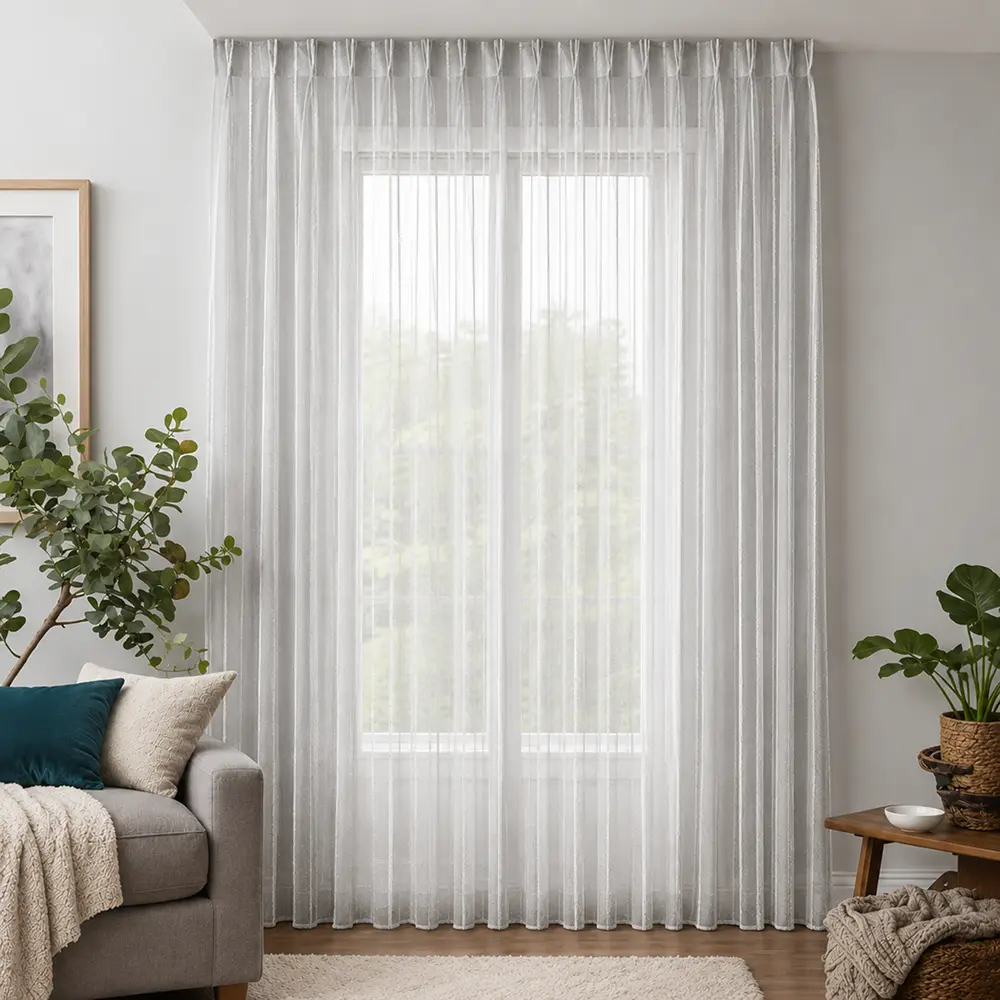
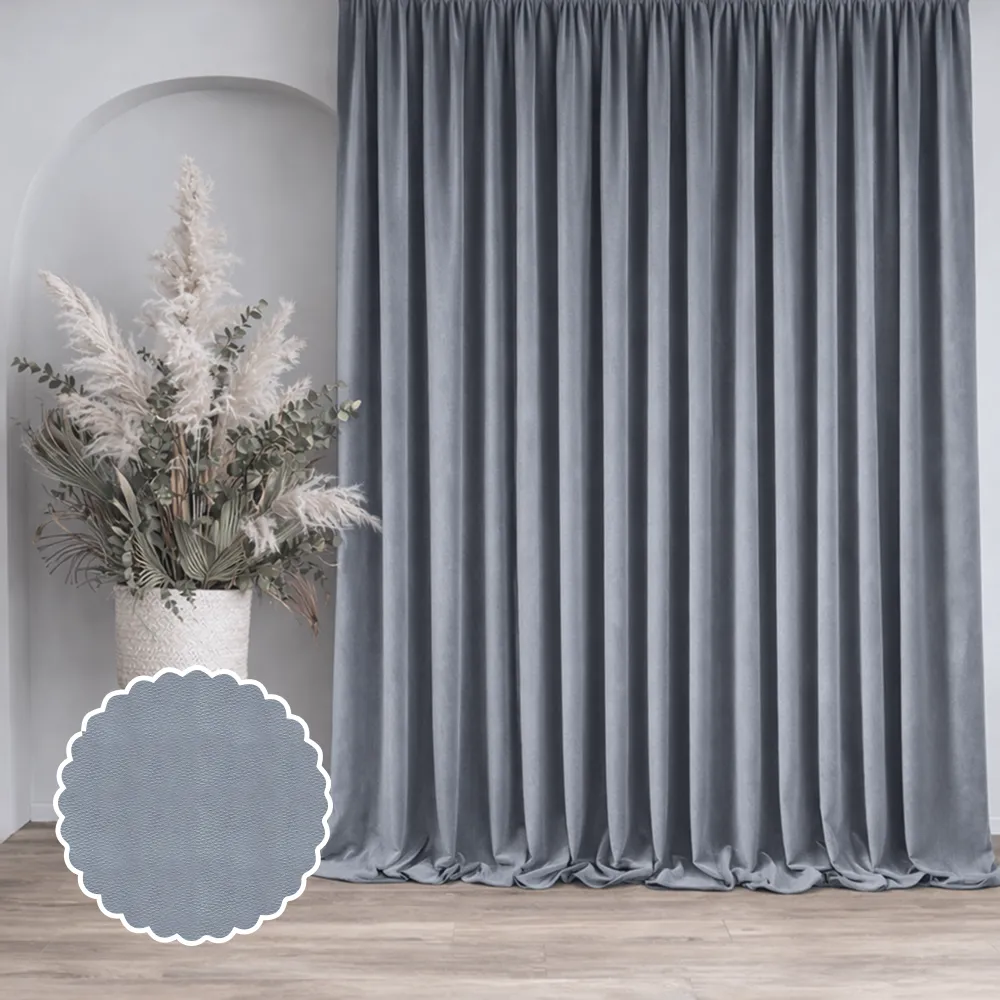
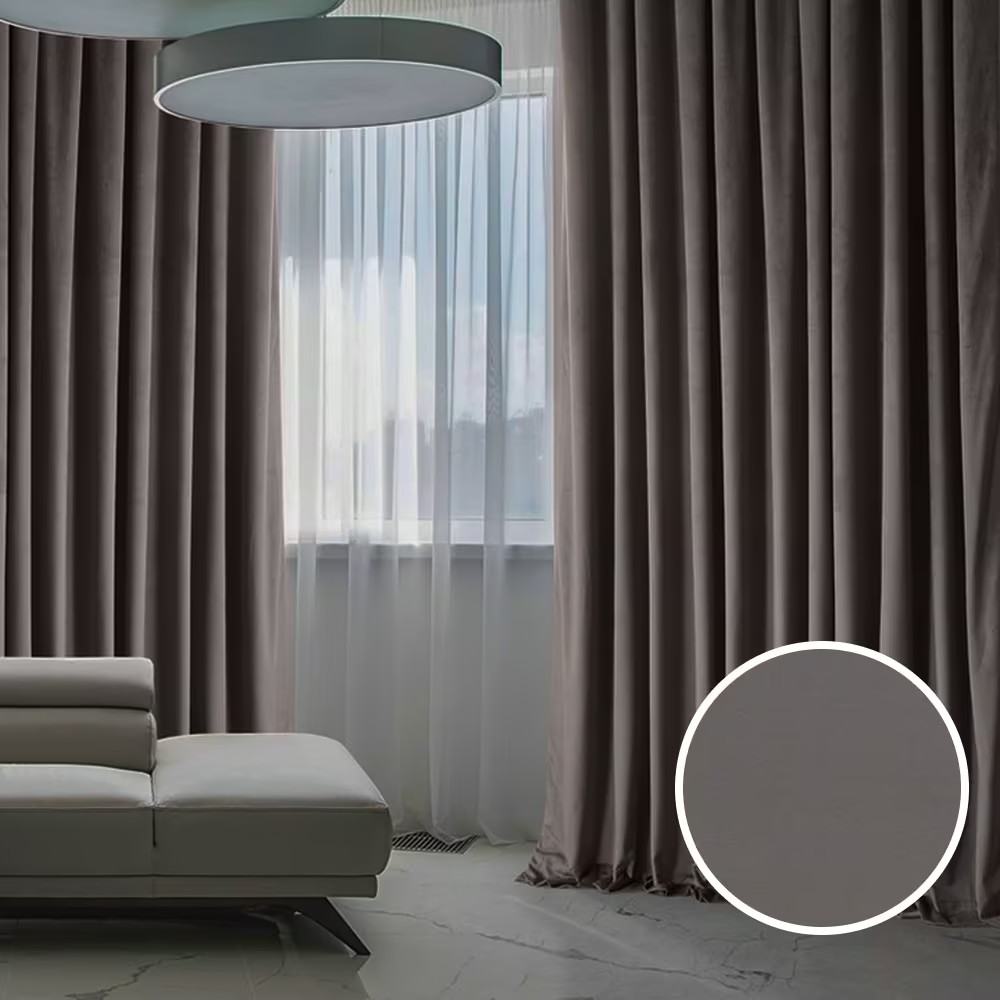
Made-to-measure curtains are the default standard for professionally finished homes and commercial interiors. The term simply means that the curtain is cut and sewn to the specific dimensions of your window — width, drop, heading height, and stack-back space — rather than manufactured to a standard size that may or may not fit your actual window.
In Dubai, made-to-measure is not a luxury choice but a practical necessity. Dubai apartments — particularly in Downtown, Business Bay, JBR, and the Marina — frequently have ceiling heights between 3.0 m and 4.0 m, floor-to-ceiling glass panels that extend the full height of the wall, and bay window configurations that do not correspond to any standard curtain size. A ready-made curtain in a standard 220 cm or 240 cm drop looks visually wrong in a 320 cm ceiling, creates a significant light gap at the bottom, and compromises the entire aesthetic of the room regardless of the fabric quality.
The measuring process is the most important part of a made-to-measure curtain order. Our specialists measure each window to the millimetre during the free home visit — not just the window width and height, but the specific heading height (the distance above the window the track or pole should be fixed, which affects how much of the wall is covered and how much the room appears taller), the floor clearance (the gap between the curtain hem and the floor), and the stack-back space (the wall space available on each side of the window when the curtains are fully open).
Heading style affects the amount of fabric required and the visual weight of the curtain. Eyelet curtains use approximately 2.0–2.5 times the track width in fabric; wave curtains use 1.6–2.0 times; pencil pleat uses 2.0–2.5 times; pinch pleat uses 2.0–3.0 times depending on the number of fingers. Our specialist advises on heading based on the fabric, the window, and the intended room aesthetic during the free home visit.
Lining selection significantly affects both performance and longevity. Unlined curtains drape beautifully but offer minimal thermal or light-blocking benefit. Interlined curtains (with a layer of bump interlining between the face fabric and the lining) add weight, drape, thermal insulation, and lifespan. Blackout lining blocks all light when the curtains are closed. Thermal blackout lining combines both functions.