The most common curtain question in Dubai — blackout or sheer? The honest answer: the room determines the answer, and in most Dubai homes, the best solution uses both. Here's the complete breakdown.
The Core Difference Between Blackout and Sheer
Blackout and sheer curtains represent opposite ends of the light-control spectrum, and choosing between them (or combining them) is the single most important curtain decision in any Dubai home. Understanding what each type actually does — in the specific context of Dubai's intense sunlight — is the starting point for making the right choice.
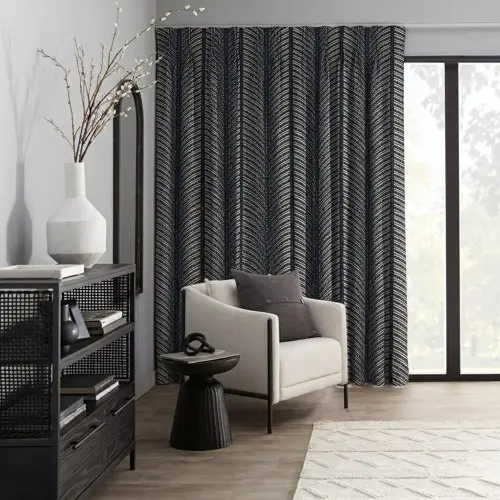
Blackout curtains are designed to eliminate light transmission when drawn. A properly specified blackout fabric or lining blocks 99–100% of the light that would otherwise pass through the window — creating a room that remains dark regardless of the intensity of the sun outside. This is achieved either through the fabric construction (triple-weave) or a blackout coating applied to the lining, not through the colour of the fabric. A white blackout curtain performs identically to a charcoal one when correctly specified.
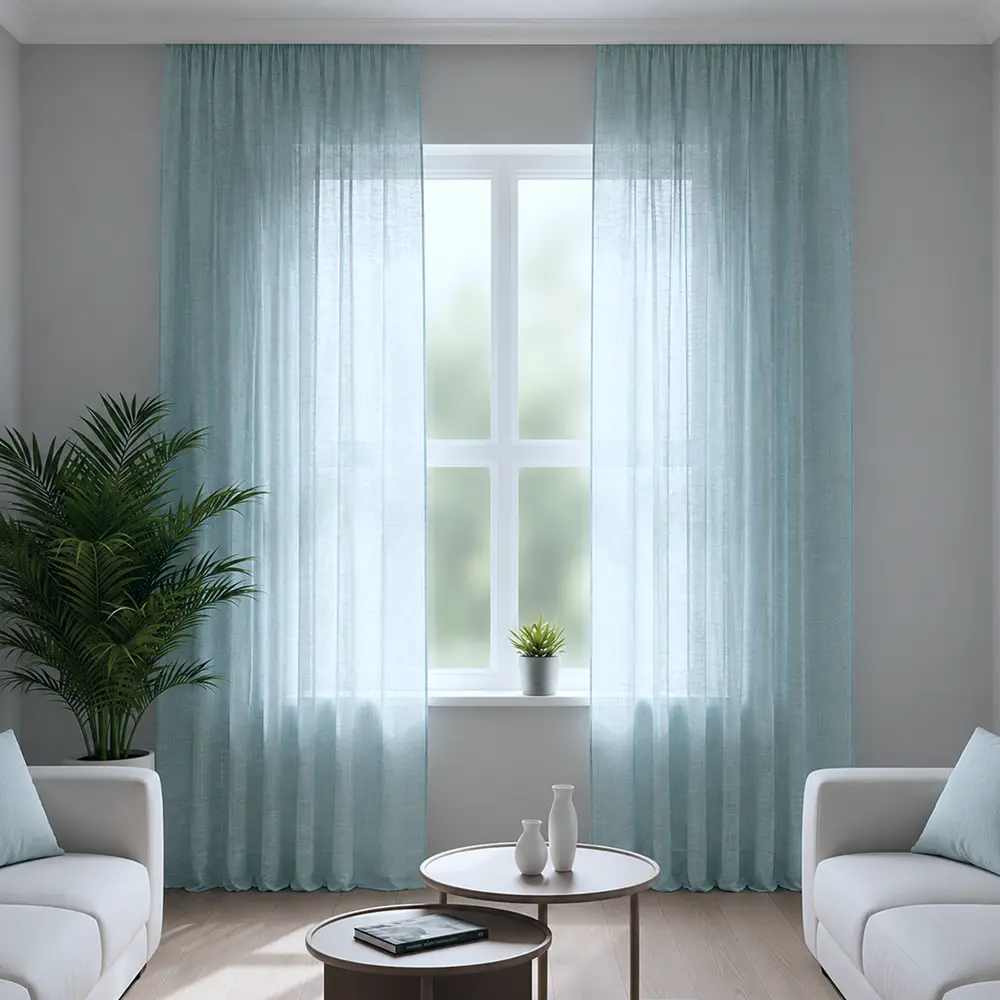
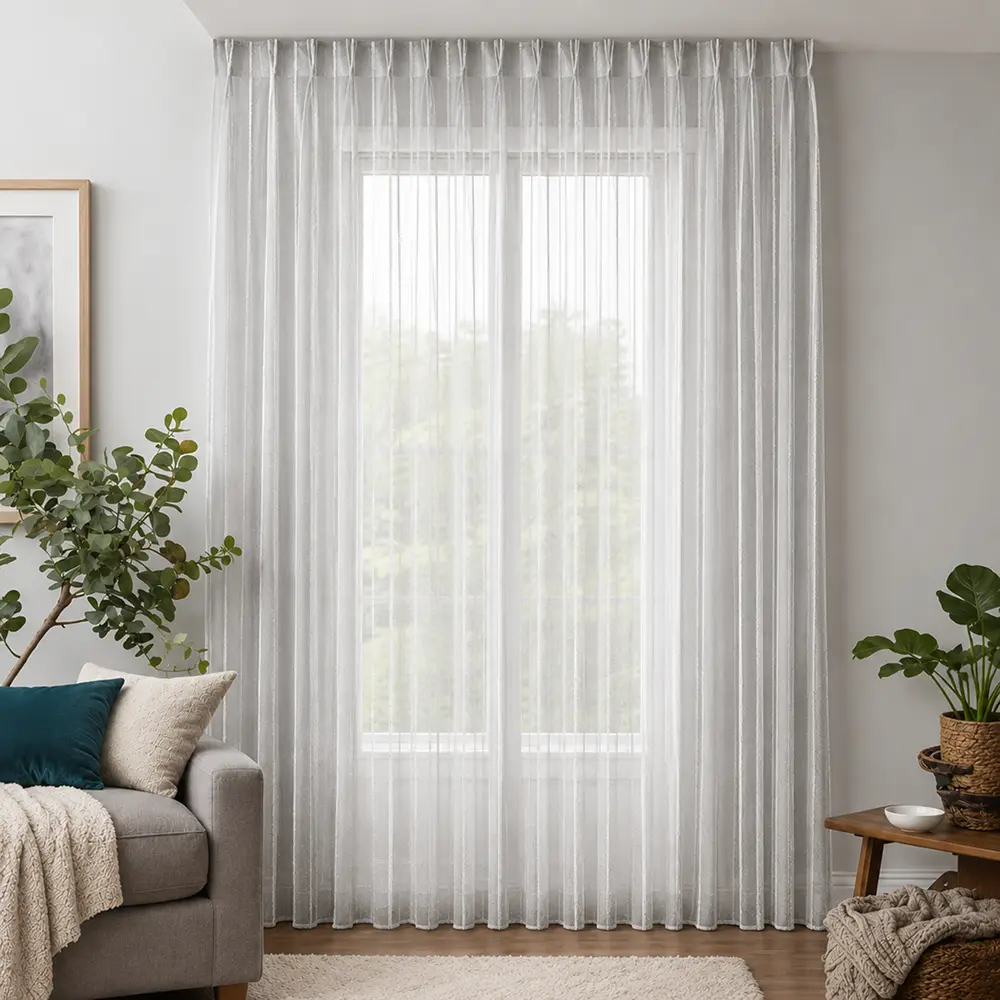
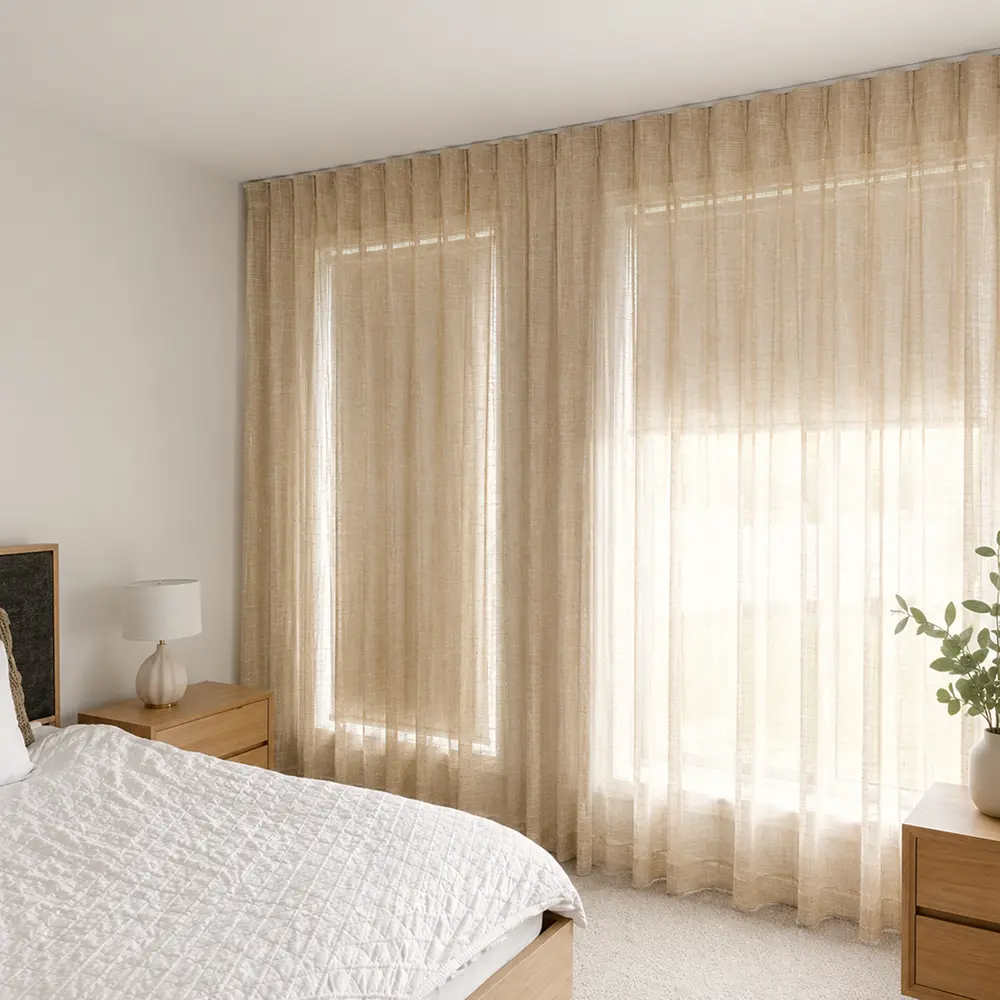
Sheer curtains are designed to filter and diffuse light rather than block it. A sheer fabric — typically a lightweight, open-weave or voile construction — softens harsh direct sunlight into a gentle, even interior light while maintaining visibility through the window from inside and providing daytime privacy from outside. In Dubai's context, sheers transform the aggressive quality of the afternoon sun into something liveable without sacrificing the views that Dubai apartments and villas are designed around.
Blackout Curtains: What They Do Best in Dubai
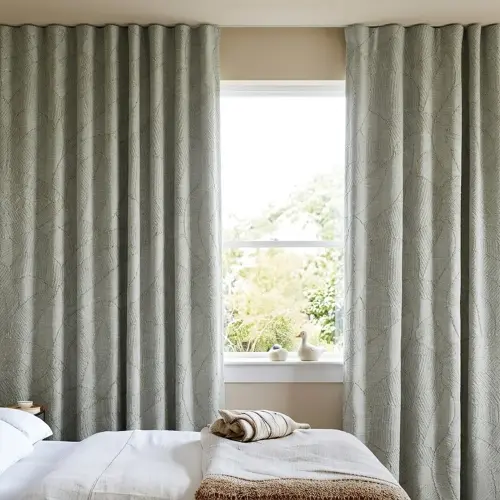
Blackout curtains are the right choice wherever complete darkness, maximum privacy, or significant solar heat reduction are the primary requirements. In Dubai, these needs are concentrated in bedrooms — where Dubai's early sunrise creates an urgent need for total light blocking that sheers cannot address.
For Dubai bedrooms specifically, the case for blackout is straightforward: sunrise before 5:30am from May to August, intense morning light that illuminates a room within minutes of dawn, and the active social culture that makes sleeping beyond 6am genuinely desirable for a significant proportion of residents. Non-blackout bedroom curtains in Dubai are, in practice, a daily quality-of-life problem from the first day of summer.
Beyond bedrooms, blackout curtains are the right choice for home cinema rooms (where screen contrast requires controlled ambient light), children's rooms and nurseries (where sleep quality is directly tied to darkness), home offices where screen glare is a problem, and west-facing living rooms in summer where the late afternoon sun is intense enough to make the room uncomfortable without significant light reduction.
The thermal benefit of blackout in a Dubai context is also meaningful. A blackout curtain drawn against a west-facing window in summer reduces solar heat gain by 30–40% versus an unprotected window — a difference that is directly visible in the room's temperature and the load on the air conditioning unit.
Sheer Curtains: What They Do Best in Dubai
Sheer curtains are the right choice wherever preserving natural light, maintaining views, or creating a soft interior atmosphere are the priorities — and where complete darkness is not required. In Dubai, these needs are concentrated in living rooms, dining rooms, and home offices facing north or east.
The key insight about sheers in Dubai is that they actually work better here than in most other markets. Dubai's intense exterior light level means that even a relatively open-weave sheer provides effective daytime privacy — the interior of a room with a sheer curtain in place appears dark from outside because the exterior light is so much brighter than any interior light source. This is the opposite of the situation in lower-light cities, where sheers can feel inadequate for privacy. In Dubai, a quality sheer provides reliable daytime privacy for any room above ground level.
The quality that makes sheers genuinely valuable in Dubai is light transformation. A room facing west in a Business Bay apartment at 3pm without any curtain is harshly lit by direct sunlight — uncomfortable to be in, impossible to watch TV in, and damaging to furniture, artwork, and flooring from UV exposure. The same room with a quality sheer: the light is soft, even, and comfortable; the view remains; the UV is meaningfully reduced; and the room becomes pleasant to inhabit throughout the afternoon. This transformation is available from a sheer that costs a fraction of what a full blackout system costs, making sheer one of the highest return-on-investment curtain choices in Dubai.
Side-by-Side Comparison: Blackout vs Sheer for Dubai
| Factor | Blackout | Sheer |
|---|---|---|
| Light Control | 100% light blocking (when correctly spec'd) | Softens and diffuses — reduces glare, not total light |
| Daytime Privacy | Complete when drawn | Effective in daylight (Dubai's high exterior light helps) |
| Night Privacy | Complete when drawn | Poor — interior visible from outside at night |
| View Preservation | No — blocks view when drawn | Yes — view maintained while sheer is in place |
| Heat Reduction | 30–40% heat gain reduction when drawn | 10–20% reduction |
| Best Room in Dubai | Bedroom, nursery, home cinema | Living room, dining room, office |
| Price Point | Higher (lining/construction premium) | Lower (light fabric, simple lining) |
The Dubai Solution: Both on a Double Track
In most Dubai living rooms, dining rooms, and multi-purpose spaces, the best answer to "blackout or sheer?" is: both. A double-track system runs a sheer curtain on the inner track and a blackout or heavyweight curtain on the outer track, allowing each layer to operate independently or together. This is the most commonly specified combination in premium Dubai apartments for exactly this reason: it provides the full benefits of both types without the compromise of choosing one.
During the day with good natural light, only the sheer is drawn — the room benefits from soft, diffused light with privacy maintained. In the late afternoon when the west-facing sun is direct and harsh, both layers are drawn — the blackout reduces heat gain and eliminates glare. At night, the outer layer alone provides privacy without the sheer layer. For sleeping, both are drawn to achieve the darkest possible room. A single curtain — whether blackout or sheer — cannot serve all four of these functions. A double track can.
The cost of a double-track system is higher than a single layer, but the price difference is less than doubling — the installation and track hardware costs are shared across both layers, and the flexibility it provides is genuinely used on a daily basis. For any Dubai living room that receives direct afternoon sun, a double-track installation is one of the clearest cases for the investment we can make.
Making the Right Choice for Your Specific Room
The answer to "blackout or sheer?" can be determined quickly by answering three questions about the room: What direction does it face? What is its primary use? What is the light like at its most intense time of day?
If the room faces east or south and is a bedroom: full blackout, no debate. If it faces west and is a living room: start with a sheer as the minimum — add a blackout or heavy layer on a double track if afternoon heat or screen glare is a problem. If it faces north and is a living room: a sheer alone may be sufficient for daytime — the light is less direct. If it is a home office: sheer or light linen without blackout — anti-glare but not darkness.
The best way to make this decision confidently is to visit the room during daylight at the time when it receives its most intense light. That moment — whether it is the 5:30am summer sunrise coming through the east-facing bedroom window or the 4pm afternoon sun blazing through the west-facing living room — is the scenario your curtain needs to handle. Everything else is secondary.
- Blackout and sheer serve opposite functions — the room's orientation, use, and light intensity determine which is right
- Sheers work better in Dubai than most markets because the high exterior light level creates effective daytime privacy even through open-weave fabric
- Blackout is non-negotiable for Dubai bedrooms facing any direction — the early sunrise affects all orientations
- For Dubai living rooms: a double-track system (sheer inner, blackout or heavy outer) handles all conditions throughout the day
- Sheers reduce heat gain by 10–20%; blackout by 30–40% — both make a measurable difference to DEWA bills in summer
- Night-time privacy requires a blackout or opaque layer — sheers provide poor privacy when interior lighting is brighter than outside
Frequently Asked Questions
Get Expert Advice at Your Home — Free
Our specialist brings samples, measures every window, and gives you a written quote — no obligation.