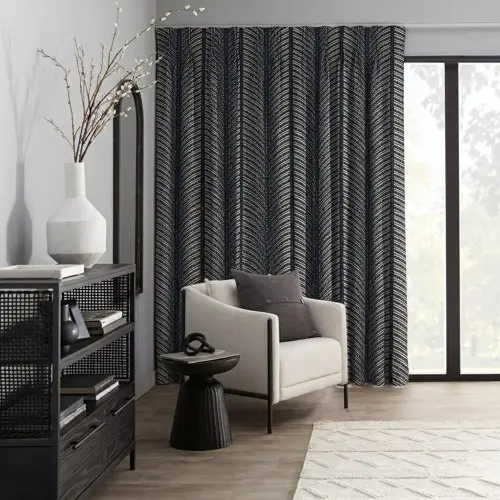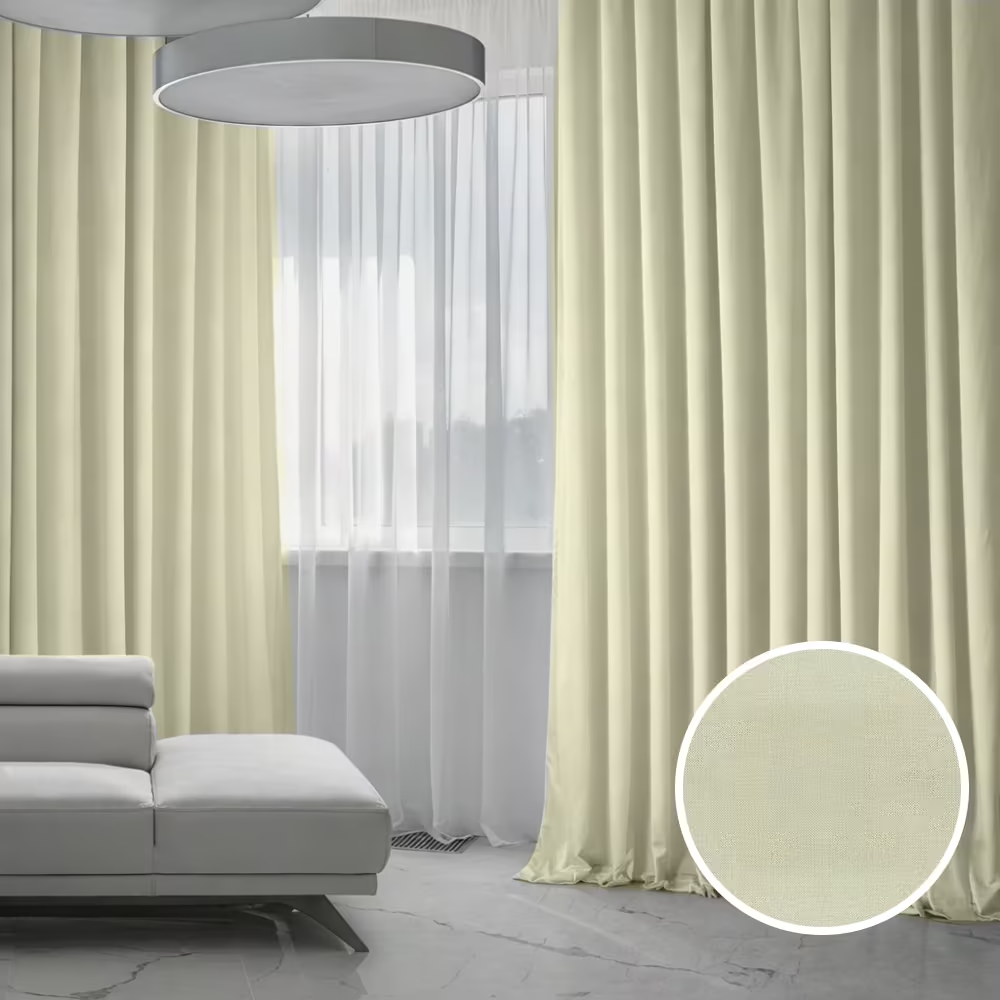
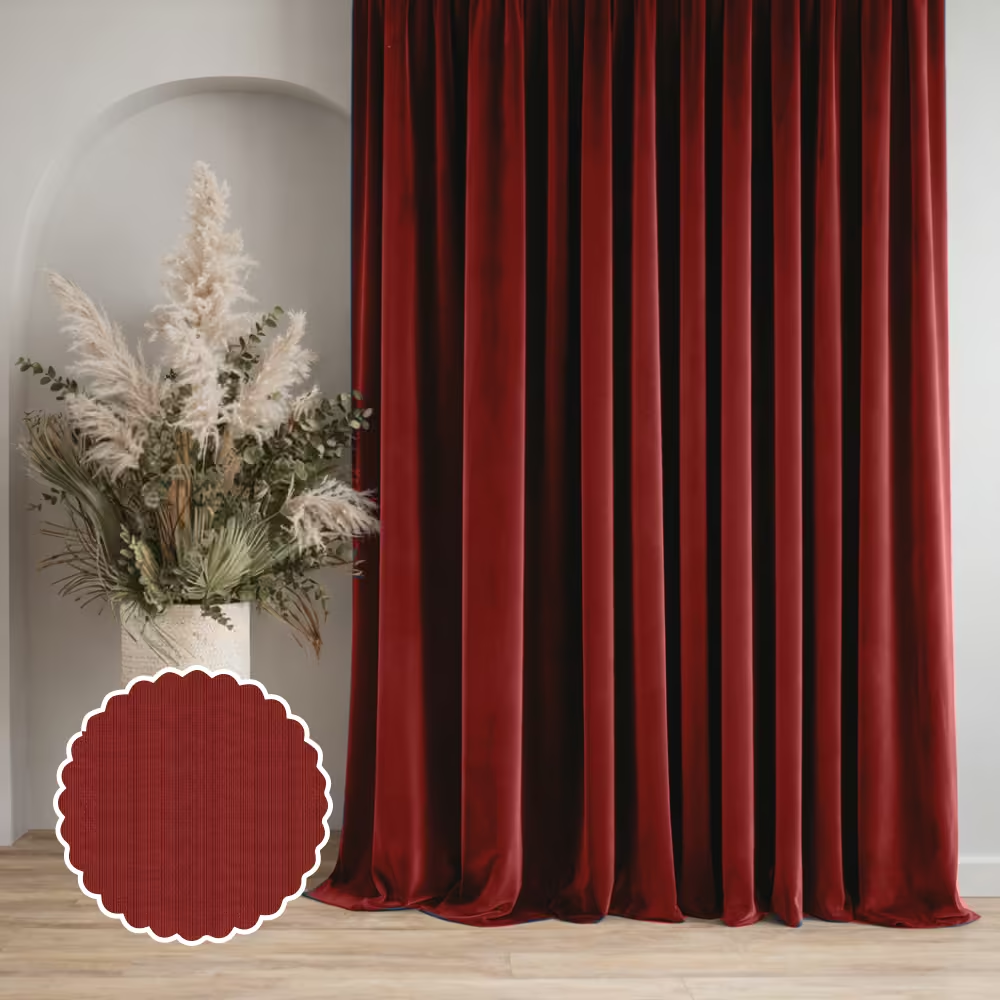
Velvet is the most acoustically effective and visually dramatic curtain fabric available — and contrary to common belief, it works exceptionally well in Dubai's climate-controlled interiors. Here's the complete guide.
Why Velvet Works in Dubai — Contrary to Popular Assumption
The most common objection to velvet curtains in Dubai is climate: "Isn't velvet too heavy and warm for the UAE?" This objection misunderstands the context in which velvet curtains function in this city. Dubai's residential and commercial interiors are climate-controlled for eight to nine months of the year. The interior temperature of a Dubai apartment, villa, or office is typically maintained at 20–23°C regardless of what is happening outside. In this context, the thermal properties of velvet are an advantage, not a drawback: in a climate-controlled interior, velvet's ability to absorb and retain warmth contributes to the acoustic and thermal comfort of the space without causing the overheating concerns that would apply in a naturally ventilated environment in a hot climate.
The second misunderstanding is the assumption that velvet is exclusively a winter fabric. Velvet's aesthetic qualities — the depth, richness, and dimensional quality of its pile surface — are not seasonal. A charcoal velvet curtain in a Dubai Marina apartment living room is no more or less appropriate in July than in January. The interior remains air-conditioned, the fabric performs identically, and the dramatic visual quality of the fabric is available year-round.
What velvet genuinely delivers that no other fabric does at a comparable price point is a combination of visual depth (the pile creates a three-dimensional surface that changes with the light angle), acoustic absorption (the pile mass absorbs sound energy significantly better than any flat-weave fabric), and thermal insulation (the fabric's density and the large trapped-air layer within the pile creates meaningful thermal resistance). In a Dubai apartment or villa where these properties matter, velvet is one of the most versatile luxury fabric choices available.
Types of Velvet for Dubai Curtains
Cotton velvet is the traditional luxury specification — the fabric from which the finest velvet curtains have been made for centuries. Its pile, cut from a woven cotton base, has a lustrous, rich quality that synthetic alternatives have not convincingly replicated. Cotton velvet is heavier than equivalent synthetic versions, which makes it one of the highest-performing acoustic curtain fabrics available. It is available in a limited colour range compared to synthetic options, but the depth of colour achievable in cotton velvet — particularly in jewel tones such as deep emerald, sapphire, and plum — is unmatched. For formal rooms in Dubai villas and premium penthouses, cotton velvet is the specification that delivers the most distinctive and long-lasting result.
Polyester velvet is the most commercially available and widely used velvet in Dubai's curtain market. It is lighter than cotton velvet, significantly less expensive, and available in an enormous colour range — from pale blush and dusty mauve through to deep forest green and near-black charcoal. The quality range within polyester velvet is wide: at the lower end, a thin, flat pile that compresses quickly and develops a worn appearance within a few years; at the upper end, a thick, dense pile with excellent recovery that maintains its appearance for a decade or more in Dubai's AC-controlled interiors.
Velvet with performance finish (sometimes labelled "practical velvet" or "easy-care velvet") incorporates a stain-resistant or moisture-repellent finish into the pile fibres. This is an increasingly popular specification for Dubai's family villa market — where velvet is desired for its aesthetic and acoustic properties, but the concern about spills, humidity from beach-side properties, or the general demands of family use makes a performance finish practically valuable.
Crushed velvet has a deliberately irregular, multi-directional pile that creates an iridescent, textured surface. It is the most decorative velvet option, with a less formal character than cut velvet. In Dubai's interior design market, crushed velvet tends to appear in residential spaces with a distinctive, personality-driven aesthetic rather than the neutral-palette minimalism that dominates the high-volume residential market.
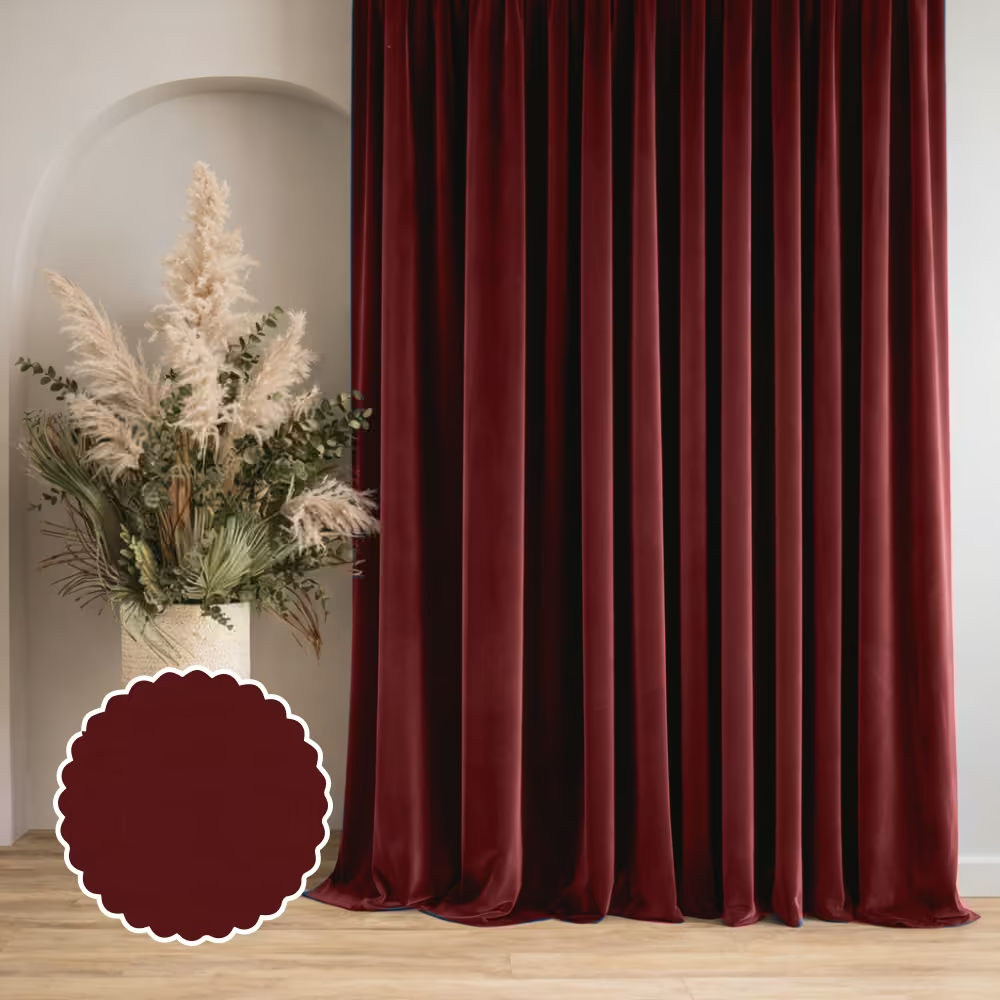
Colour Choices for Velvet Curtains in Dubai
Velvet's pile surface interacts with light in a way that makes colour selection both more rewarding and more complex than with flat-weave fabrics. The pile directs light reflection — when the pile runs upward, the fabric appears darker and richer; when it runs downward, it appears lighter and more luminous. This directionality means that a velvet curtain in a Dubai interior looks different in morning light, afternoon light, and artificial evening lighting — a quality that adds to its appeal but requires seeing the fabric in your actual room before confirming the colour.
The Dubai interior context for velvet colours: Dubai's most popular velvet choices differ from global trends because the dominant interior palette in Dubai's residential market — warm neutrals, natural textures, and high-contrast accents — creates specific opportunities and constraints for velvet.
Charcoal and near-black velvet is the most popular single velvet colour in Dubai's premium residential market. Against the white and warm white walls that dominate Dubai's interior design language, a deep charcoal or near-black velvet creates a dramatic contrast that reads as deliberate, sophisticated, and confident. In wave heading on a ceiling-mounted track, charcoal velvet in a Dubai living room or master bedroom is one of the most consistently admired curtain treatments we install.
Emerald green, sapphire blue, and deep teal in velvet are the "statement" colours that drive the most compliments from guests. They work best in formal spaces with sufficient volume — a large living room in a Jumeirah villa, a formal dining room in a Palm Jumeirah penthouse — where the boldness of the colour has room to breathe rather than overwhelming a smaller space. Dubai's luxury hospitality sector uses these colours extensively in its lounge and event spaces, and they read as globally appropriate luxury choices in the UAE context.
Dusty rose, warm burgundy, and terracotta velvet are growing in popularity in Dubai's interior design market as the dominant palette shifts from cool neutrals toward warmer, earthier tones. These colours reference the desert landscape, complement the natural stone, rattan, and warm timber tones that are increasingly used in Dubai's premium interior fit-outs, and photograph exceptionally well in the warm-toned lighting that is standard in high-quality Dubai residential styling.
Heading and Track Options for Heavy Velvet
Velvet's weight is its most significant practical consideration for heading and track selection. A pair of heavyweight cotton velvet panels for a 3m × 3m window can weigh 15–25kg — substantially more than equivalent linen or technical blackout panels. This weight has direct implications for the heading style and track system selection.
Pinch pleat is the most traditional and widely used heading for heavyweight velvet. The pleated structure distributes the fabric weight evenly across a full-span track or pole, and the formal character of the heading matches the formal quality of heavy velvet. For pinch pleat velvet, a strong corded or uncorded track with heavy-duty gliders is required — a standard lightweight track will not bear the load of heavyweight velvet panels over time.
Wave heading in velvet requires careful fabric selection. The heaviest cotton velvets can be too stiff to hold the fluid wave profile — the pile surface and the fabric weight combine to resist the fold. Medium-weight polyester velvet with a lighter pile typically achieves a good wave profile; heavy cotton velvet in wave requires a track designed for heavyweight fabrics with stronger carrier spacing. Our fabric specialist advises on this during the home visit.
Motorized operation is particularly strongly recommended for velvet curtains wider than 2m. The manual operation of heavy velvet is demanding on both the fabric (the heading stress from pulling can damage the pleat structure over time) and the user (repeatedly drawing a 20kg curtain pair manually is genuinely tiring). A wired or rechargeable motor appropriate for heavy fabric loads makes velvet in large Dubai rooms effortless and practical for daily use.
Care and Longevity of Velvet Curtains in Dubai
Velvet curtains in Dubai's climate-controlled interiors are among the longest-lasting curtain fabrics available, precisely because they spend their lives in conditions that are gentle on the fabric: consistent temperature, moderate humidity, and no direct sun contact when correctly lined with a blackout or UV-stabilised lining that prevents UV from reaching the face fabric through the window.
The main maintenance requirement for velvet in Dubai is dust removal. Dubai's fine desert dust settles on the pile surface and, over time, can dull the fabric's lustre. Regular light vacuuming with a soft brush attachment on the lowest suction setting — along the pile direction, not against it — keeps the pile clear and maintains the fabric's reflective quality. Professional steam cleaning every 12–18 months restores the pile's depth and revives the colour in a way that vacuuming alone cannot achieve.
Velvet should not be machine-washed. The pile structure compresses and distorts in a washing machine and will not recover to its original state after machine washing. Professional cleaning by a curtain specialist is the only safe washing method for made-to-measure velvet panels. In practice, because velvet is almost always used with blackout or standard lining that protects it from direct dust and UV, and because Dubai's AC-controlled interiors are dry and relatively clean environments, deep cleaning is required less frequently than for unlined or lightly lined fabrics in other climates.
- Velvet works exceptionally well in Dubai because interiors are climate-controlled — the heat concern doesn't apply inside
- Velvet's pile absorbs sound more effectively than any flat-weave fabric — the best acoustic curtain choice for Dubai apartments
- Charcoal velvet against white Dubai interior walls is the most admired single curtain treatment in the premium residential market
- Heavyweight velvet requires a heavy-duty track rated for the panel weight — undersized tracks are the most common cause of velvet failure
- Motorized operation is strongly recommended for velvet panels wider than 2m — manual operation of a 20kg curtain pair is genuinely impractical
- Velvet lasts longest of all curtain fabrics in Dubai interiors when correctly lined — the AC-controlled environment is gentle and UV is blocked by the lining
Frequently Asked Questions
Get Expert Advice at Your Home — Free
Our specialist brings samples, measures every window, and gives you a written quote — no obligation.