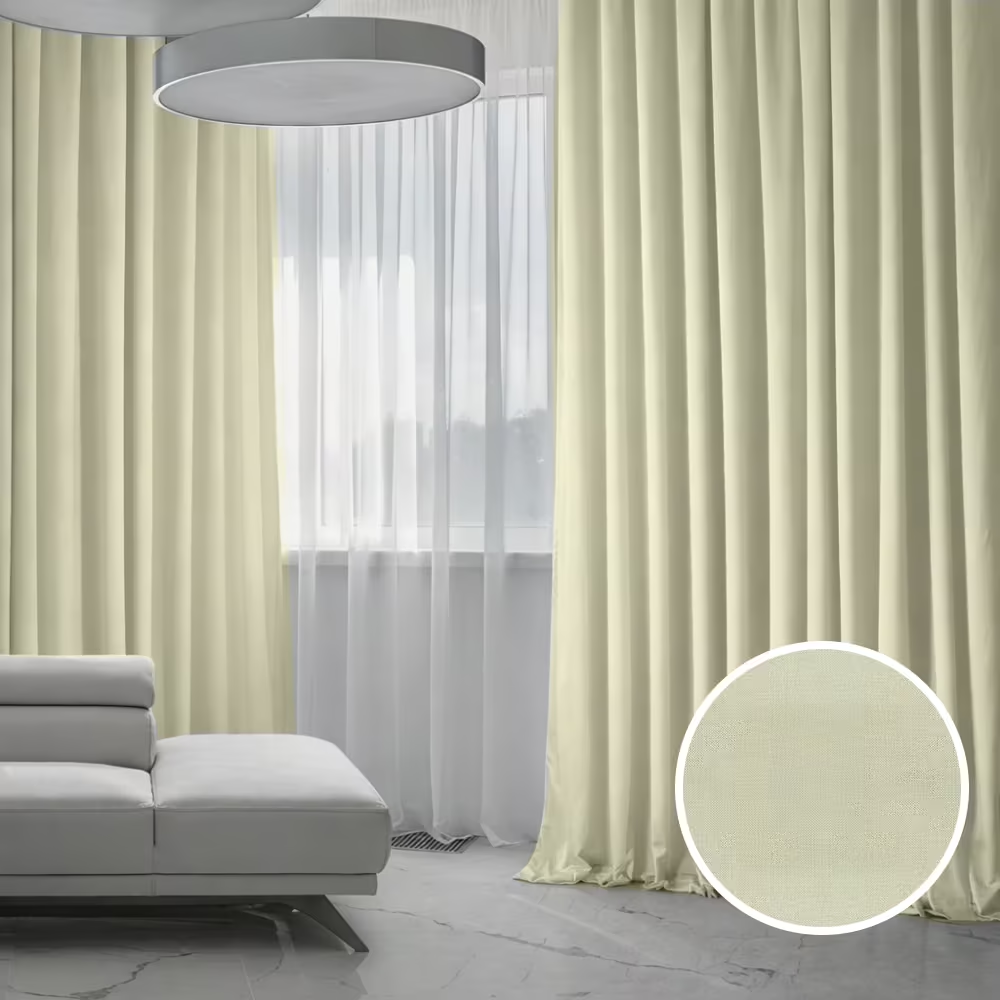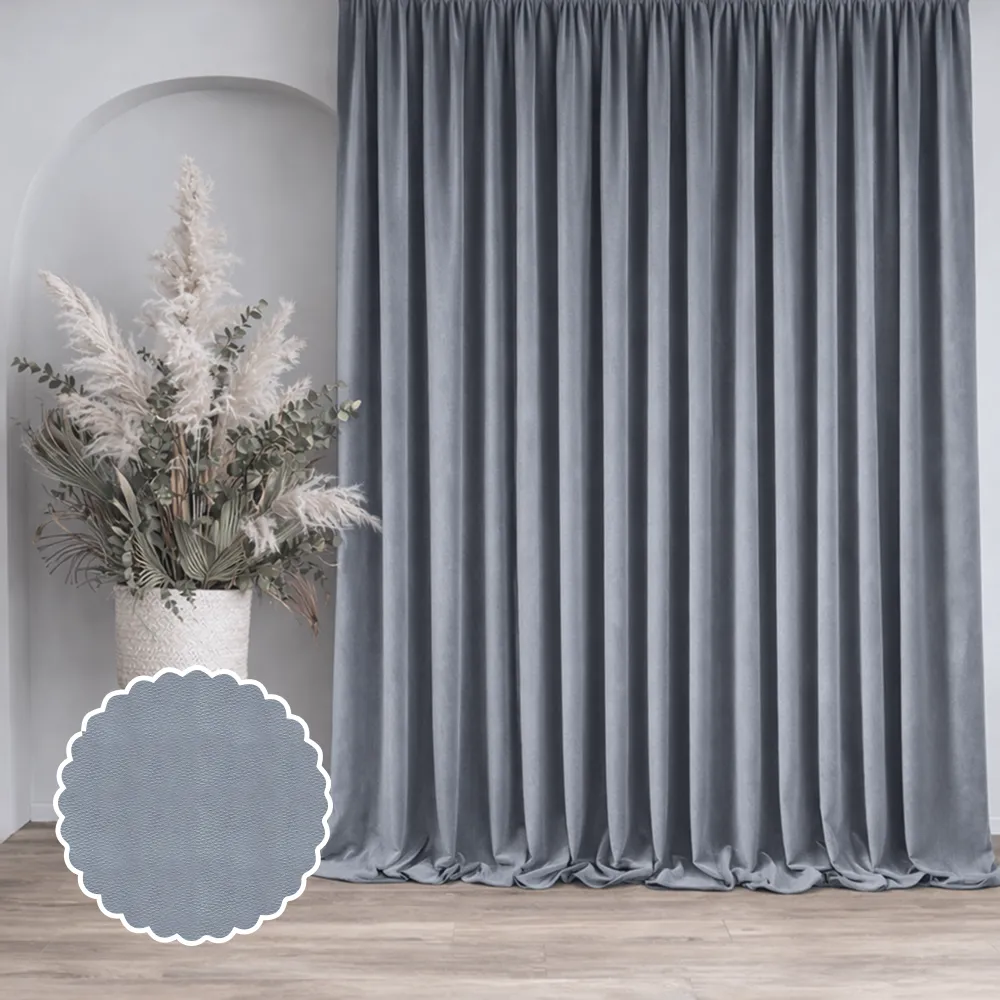
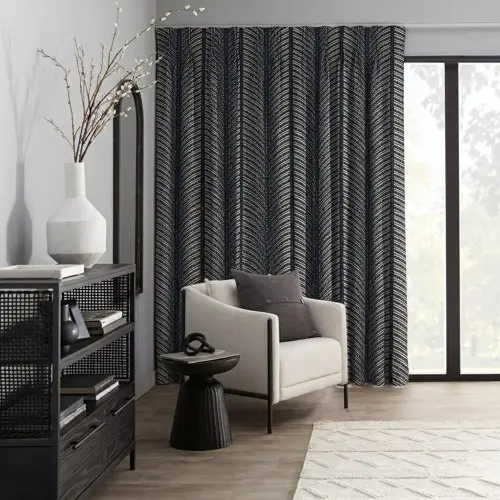
The lining is the most important technical decision in a Dubai curtain — more than the fabric, more than the heading. Here's exactly what each lining type does, and which to choose for which room.
Why Lining Matters More in Dubai Than Anywhere Else
In markets with moderate sunlight and mild climates, curtain lining is often treated as optional — an upgrade that adds body and drape to the face fabric but doesn't fundamentally change the curtain's functional role. In Dubai, this framing is completely incorrect. Lining is the functional specification of a Dubai curtain. It determines how much light the curtain blocks, how much heat it reflects, how well it protects the face fabric from UV degradation, and how long the curtain will last before needing replacement.
Dubai receives 3,509 hours of direct sunlight per year. Summer temperatures reach 48°C. The UV index in July and August frequently reaches 11+ — the "extreme" category that causes sunburn on exposed skin in under 10 minutes. A curtain fabric hanging unlined in front of a south-facing window in a Dubai apartment is exposed to conditions that will bleach, weaken, and eventually disintegrate it within 2–4 years. The same fabric with a quality lining will retain its colour, strength, and appearance for 12–15 years. The lining is the investment; the face fabric is what makes the room look good.
Beyond protection, the lining choice determines the functional performance of the curtain in four key areas: light control (from none to 100% blackout), heat management (from minimal thermal effect to 30–40% reduction in solar heat gain), acoustic performance (from none to meaningful noise reduction in heavily interlined panels), and drape quality (the way the fabric falls and holds its folds — a well-lined curtain hangs significantly better than the same fabric unlined).
Unlined Curtains: When They Work in Dubai
Unlined curtains have a place in Dubai, but that place is specific. The appropriate applications are: living room sheers (where light diffusion, not light blocking, is the goal), curtains in rooms with no direct sun exposure (north-facing rooms in a villa), indoor-to-outdoor areas covered by an external canopy or pergola where UV and heat gain are already managed by the external structure, and decorative-only applications such as a curtain used as a room divider rather than a window treatment.
For any window receiving direct sunlight at any point in the day — which is the majority of windows in Dubai's residential buildings — an unlined fabric will fade noticeably within one or two seasons, and will begin to weaken structurally within three to four years. The cost of replacing a faded and weakened curtain is invariably higher than the cost of lining it correctly from the outset.
For sheer curtain applications (living room voiles, translucent panels), "unlined" is the correct specification by design — these curtains are intended to transmit and diffuse light, not block it. But even sheers benefit from a UV-stabilised facing on the window side — some sheer fabrics are available with a UV-protective finish that extends their life significantly in direct sun without affecting the light-filtering quality.
Standard Lining: The Baseline for Every Dubai Curtain
Standard lining is a cotton or polyester sateen fabric sewn to the back of the face fabric. It adds body to the panel, significantly improves the drape and fold quality of the finished curtain, and provides meaningful UV protection to the face fabric — extending its life from 3–4 years (unlined in Dubai's sun) to 10+ years. For any face fabric in Dubai that is not intended to function as a sheer, standard lining is the minimum specification that makes practical sense.
Standard lining blocks approximately 50–60% of visible light — not blackout, but meaningfully better than unlined. It provides moderate daytime privacy for first and second-floor apartments where overlooking is a concern. In a room without direct sun exposure that only needs privacy and improved drape, standard lining is the right choice: it costs less than blackout lining, it adds less weight to the panel (which matters for very wide curtains), and it doesn't overcorrect for rooms where complete darkness is not required.
The quality of standard lining varies significantly across Dubai's supplier market. The difference between a quality sateen lining (typically British or Belgian manufacture, tightly woven, with a UV stabiliser incorporated) and a low-cost polyester lining is most visible after two years in Dubai's conditions: the quality lining retains its colour and weight; the low-cost version becomes brittle, shrinks differently from the face fabric in any humidity change, and eventually causes the curtain panel to pull and distort. Specifying lining quality alongside face fabric quality is not something to overlook.
Blackout Lining: Essential for Dubai Bedrooms and Home Cinemas
Coated blackout lining adds a light-blocking layer between the face fabric and a sateen backing. The coating — typically a white or pale foam material applied by the mill — blocks 98–100% of light transmission when correctly specified (Class 4, BS EN 13120). It is the most specified lining in Dubai's residential curtain market, reflecting the reality that bedroom blackout performance is the most critical curtain specification in this city.
Blackout lining comes in two coating formats: single-pass and three-pass. Single-pass (one coating layer) achieves approximately 85–95% light reduction — room-darkening rather than true blackout. Three-pass blackout (three coating applications, with a darker layer in the centre) achieves 99–100% light blocking — genuine Class 4 blackout. Always confirm which format you're being quoted before ordering.
The advantages of blackout lining over an uncoated lining in Dubai are: complete light blocking for quality daytime and early-morning sleep, a 30–40% reduction in solar heat gain through south and west-facing windows, complete UV protection for the face fabric (the coating blocks virtually all UV radiation from reaching the face fabric from the window side), and better thermal performance in winter (the coating adds an insulating layer that reduces heat loss through the glass — less relevant in Dubai's mild winters but meaningful for the air conditioning load during the 9-month cooling season).
The one constraint of coated blackout lining: it can crease if not hung correctly. Panels should hang vertically from the moment of installation — folding or bunching a coated blackout curtain while it is stored or during installation can cause the coating to develop permanent crease marks that are visible from the front of the panel. Our installation team always handles coated blackout panels with this in mind.
Thermal and Interlining: Energy Savings and Acoustic Comfort
Interlining is a layer of cotton, polyester, or blended wadding inserted between the face fabric and the outer lining. It is the most significant upgrade to a curtain's functional performance beyond the basic lining specification, and in Dubai's context its most significant contribution is to the thermal and acoustic performance of the finished panel.
Thermal performance: An interlined curtain hangs away from the window at a greater distance than a non-interlined panel, creating a larger trapped-air insulation layer. Combined with blackout lining on the window side, an interlined panel creates a meaningful thermal barrier between the room and the window. In a Dubai villa with large south or west-facing windows, this can reduce air conditioning load by 20–30% through those specific windows — a difference that compounds over nine months of intensive cooling and is directly visible on energy bills over a year.
Acoustic performance: The mass of interlined fabric absorbs sound energy significantly better than a standard-lined curtain. In Dubai apartments where building noise, corridor sound, and external traffic are everyday concerns, an interlined curtain in a living room or bedroom adds genuine acoustic comfort. The improvement is most pronounced with heavy face fabrics (velvet, heavyweight linen) where the combined mass of fabric, interlining, and lining creates a meaningful acoustic barrier.
Drape quality: Interlining creates the most luxurious, sculpted drape of any curtain construction. The weight and body of the interlining layer fills out the fabric, creating deep, even folds in any heading style. A pinch-pleat curtain in heavyweight linen with interlining has a presence and quality that is immediately recognisable — the specification consistently found in the highest-quality Dubai villa installations and five-star hotel interiors across the UAE.
How to Choose Your Lining: A Room-by-Room Guide for Dubai
Bedroom (all Dubai bedrooms): three-pass blackout lining, minimum. For master bedrooms or any bedroom where the highest sleep quality is the priority: three-pass blackout lining plus interlining. The thermal and acoustic benefits of interlining justify the cost in a room that is used for sleep every night of the year.
Living room (north or east-facing, no direct sun): standard lining is sufficient. The room doesn't receive intense direct sun, privacy is adequate with standard lining, and the thermal and blackout performance of higher specifications is unnecessary.
Living room (south or west-facing, direct afternoon sun): blackout lining for the outer layer on a double-track system, standard lining for the sheer inner layer. The blackout layer is drawn in the afternoon to reduce heat gain and glare; the sheer handles morning light.
Home office (screen-facing window): 70–85% light reduction lining — better than standard, short of full blackout. The goal is anti-glare, not darkness: a medium-weight lining that reduces the harsh reflection of Dubai's intense light on screen surfaces without creating a completely dark working environment.
Children's room / nursery: three-pass blackout lining — same specification as a master bedroom. The reasoning is identical: Dubai's early sunrise disrupts children's sleep significantly earlier than in lower-light markets, and the whole-family consequence of an inadequate blackout in a child's room is a daily quality-of-life problem through the summer.
- Lining is the most important functional decision in a Dubai curtain — it determines performance, protection, and lifespan
- Unlined face fabrics in direct Dubai sun fade and weaken within 2–4 years — lining extends usable life to 10–15 years
- Standard lining blocks 50–60% of light and is the minimum for any non-sheer Dubai curtain
- Three-pass blackout lining is the correct specification for all Dubai bedrooms — not single-pass, not room-darkening
- Interlining reduces air conditioning load by 20–30% on specific windows and adds meaningful acoustic performance
- Always confirm blackout lining is three-pass (Class 4) — single-pass lining is sold as "blackout" by some suppliers but achieves only 85–95% light reduction
Frequently Asked Questions
Get Expert Advice at Your Home — Free
Our specialist brings samples, measures every window, and gives you a written quote — no obligation.