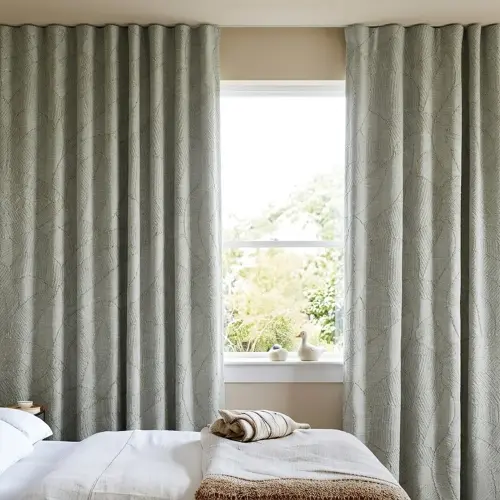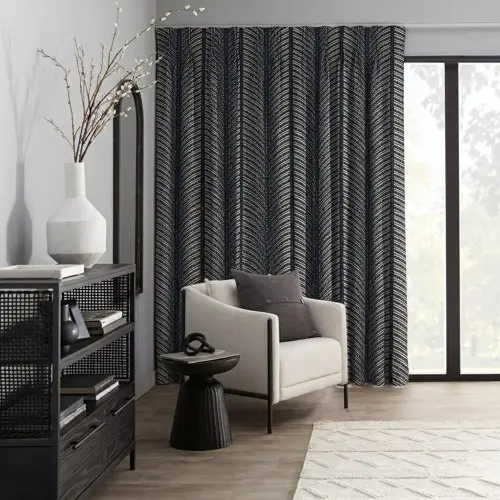
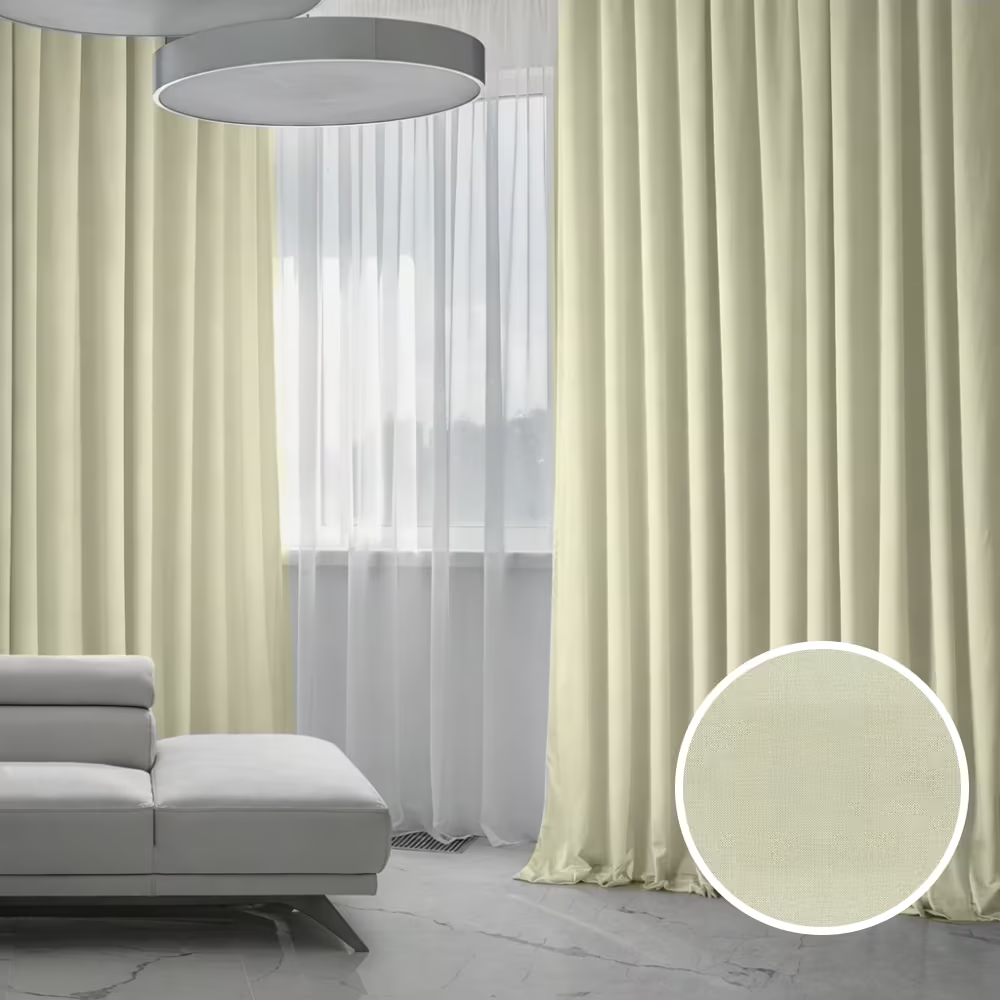
Dubai's 5:30am summer sunrise makes the bedroom the most performance-critical room in the home for curtains. Here's exactly what to choose — and why the usual advice doesn't apply here.
Why Dubai Bedrooms Demand a Different Approach
A bedroom curtain in Dubai operates under conditions that make most generic advice irrelevant. From May to August, the sun rises before 5:30am — and by 6am it is bright enough to fully illuminate a room without any other light source. The intensity of Dubai's light at dawn rivals what northern European cities see at peak midday. This single fact changes the performance specification for a bedroom curtain more than any other design consideration.
Add to this Dubai's active social culture (late evenings are the norm, not the exception), the presence of domestic staff and young children whose sleep schedules rarely align with sunrise, and the common pattern of shift workers in the hospitality, healthcare, and aviation sectors who sleep during the day — and it becomes clear that the bedroom curtain in Dubai is a critical piece of infrastructure, not a decorative accessory.
The consequence of getting it wrong is concrete and daily: poor sleep, early waking, reduced daytime rest for shift workers, and fractious children who have been awake since 5:30am every day of the UAE summer. The consequence of getting it right is equally concrete: complete darkness on demand, regardless of the time or the intensity of the sun outside.
Blackout: The Non-Negotiable Starting Point for Every Dubai Bedroom
Every bedroom curtain decision in Dubai should start from a single baseline requirement: true blackout. Not room-darkening, not "blackout effect", not "90% light reduction" — but certified, tested, genuine 100% light blocking that meets Class 4 of BS EN 13120 (1% or less light transmission). This is not an aspirational standard; it is the minimum specification that actually solves the Dubai bedroom light problem.
The distinction between blackout (100%) and room-darkening (85–95%) is significant in Dubai's light environment. At 6am in July, the exterior light intensity is extreme. A room-darkening curtain reduces that intensity to something between dim and moderately lit — you can still clearly see furniture, ceiling details, and the shapes of people in the room. This is not adequate for quality sleep. True blackout creates a room that is as dark at 6am as it would be at midnight. That is what the specification needs to deliver.
Once blackout is established as the non-negotiable baseline, every other decision — fabric, colour, heading style, track system — is a layer of preference on top of a fixed performance requirement. Choose the face fabric you love; choose the heading style that suits the room; choose the colour that fits the interior. The blackout is built into the construction underneath all of those choices.
Fabric Choices for Dubai Bedrooms
Blackout-lined linen is the most popular bedroom curtain combination in Dubai's current market — and for good reason. The natural texture and warmth of linen creates a calm, restful bedroom environment. The coated blackout lining underneath delivers the performance. The combination is available in every colour from ivory to deep navy, and in weights from a light natural weave to a heavy-textured slub. For master bedrooms in premium developments across Dubai Hills, Palm Jumeirah, and Downtown Dubai, this is the most commonly specified combination we deliver.
Triple-weave blackout fabric is the choice when the face fabric IS the blackout — a technical fabric where the weave itself blocks light without a separate lining. Triple-weave drapes more fluidly than coated lining fabrics, because it behaves like a standard fabric rather than a lined panel. It is the better choice for wave heading in a bedroom, where the fluid S-fold profile is only achievable with fabrics that drape naturally.
Velvet with blackout lining is the premium bedroom option — primarily for master bedrooms where maximum acoustic comfort is as important as light blocking. Velvet's pile absorbs both light and sound more effectively than any flat-weave fabric. A heavily lined velvet in a Dubai master bedroom delivers a genuinely hotel-quality sensory environment: complete darkness and meaningful noise reduction from corridor sound, air conditioning units, and building noise. It is heavier to operate manually, making it one of the strongest use cases for motorized operation in a residential bedroom.
Technical blackout in solid colours — available in ivory, grey, charcoal, navy, and slate — is the practical, value-for-money choice for guest bedrooms and children's rooms where the face fabric's aesthetic is less critical than performance and ease of maintenance. A good-quality technical blackout fabric has a clean, neutral appearance that suits most bedroom interiors, costs less than a premium face fabric with separate blackout lining, and is straightforward to maintain.
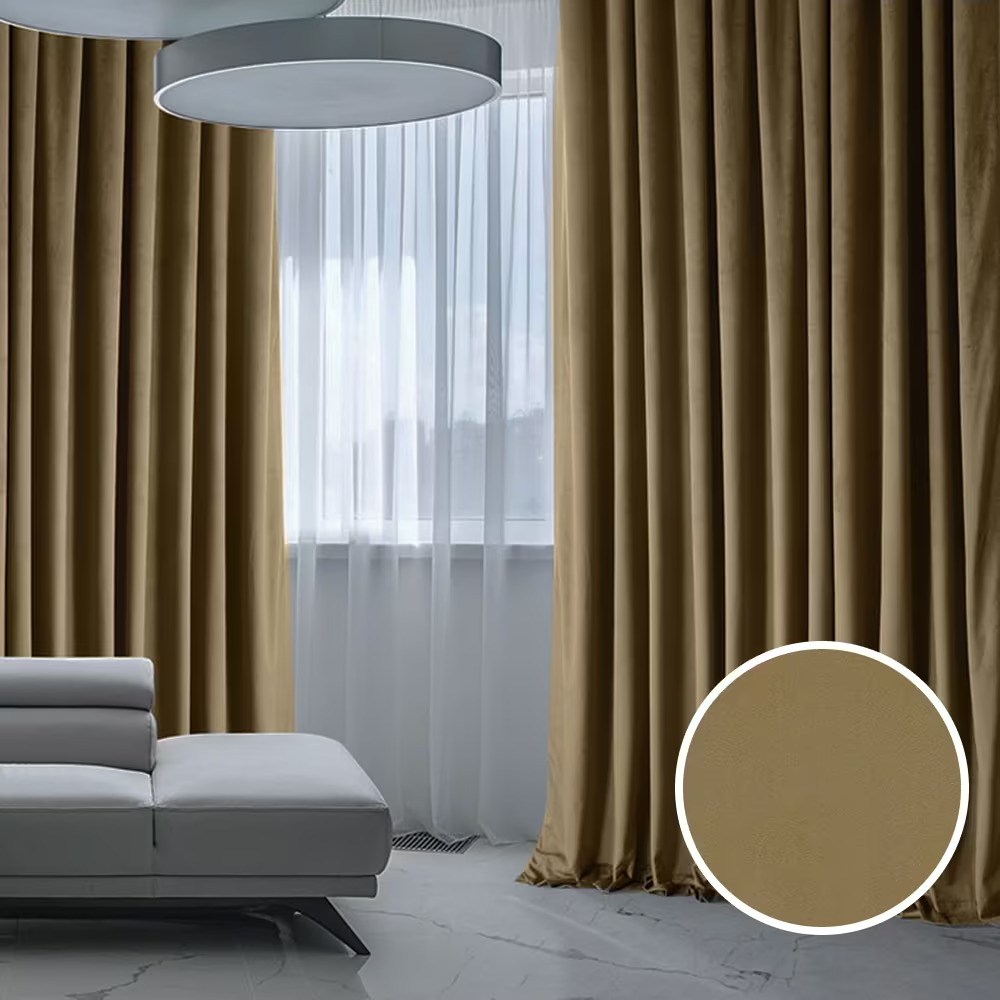
Colour Psychology for Dubai Bedroom Curtains
Colour in a bedroom curtain has two distinct effects: the visual impact of the fabric as part of the room's interior design, and the ambient light colour that the fabric contributes when closed (even a blackout curtain transmits a small amount of colour-toned ambient light from room lighting reflecting off the fabric surface). Both matter in a bedroom.
Natural and cream tones are by far the most popular choice in Dubai bedrooms — particularly in master bedrooms. They create a sense of calm and warmth, work with any wall colour, and make a room feel larger and more spacious when the curtains are drawn (which is relevant in bedrooms that are less generously proportioned). In Dubai's apartment market, where bedroom sizes are frequently more constrained than the living room, this is a practical advantage.
Charcoal and dark navy create a cocooning effect that many people find genuinely conducive to sleep — the visual sense of enclosure when the curtains are drawn. For south-facing master bedrooms in villas with high ceilings and large windows, where the room can feel overwhelmingly bright even with blackout curtains open, a darker curtain creates visual balance. These colours are the default specification in high-end hospitality interiors across Dubai, and for good reason: they create the conditions — visual, acoustic, and thermal — for deep, undisturbed rest.
Muted pastels and dusty tones — dusty rose, sage, soft slate — are a growing choice in Dubai bedrooms influenced by the current interior design trend toward calm, muted palettes over stark contrasts. They add personality without visual agitation, complement natural materials and organic textures, and photograph well for those who document their interiors on social media (a real consideration in Dubai's Instagram-conscious residential market).
Heading Styles and Track Systems for Dubai Bedrooms
The heading style in a bedroom is partly aesthetic, but it also has a functional dimension that matters specifically in Dubai: the precision with which the curtain closes and how well it seals against edge light bleed. This is where heading and track choice directly affects blackout performance.
Wave heading is the premium bedroom choice — the hotel-standard profile that creates even, uniform folds across the full width of the window. It requires a specific C-rail track system, which has the significant advantage of allowing the track to be ceiling-mounted and positioned close to the window reveal. When a wave track is ceiling-mounted and extends 20–30cm beyond the window on each side, the combination virtually eliminates edge light bleed — the most common source of incomplete blackout performance in Dubai bedrooms.
Eyelet heading on a standard pole is the most popular bedroom heading in Dubai's apartment market — it is simple, versatile, and works with any face fabric. For eyelet to deliver the best blackout result, extend the pole 25cm beyond the window on each side and use a pole that positions the curtain as close to the wall as possible. Many Dubai apartments have window reveals that allow a pole to be fitted very close to the window, minimising the light path around the edges.
Motorized wave heading — our most-requested bedroom upgrade for occupied Dubai apartments — combines the precision of wave heading with the convenience of app or remote operation. The limit-programmed motor stops at exactly the same closed position every time, delivering consistent blackout performance without the uneven gaps that can occur with manual closing. For any bedroom where consistent sleep performance matters, this is the specification worth investing in.
Master Bedroom vs Guest Room vs Children's Room: Different Priorities
Master bedroom: the highest specification room in the house. Invest in premium face fabric, true blackout lining, quality track, and consider motorization if the window is wider than 2m. The master bedroom curtain is used twice a day, every day — it is the single highest-ROI curtain investment in any Dubai home.
Children's rooms and nurseries: the most performance-critical rooms in the home from a pure sleep-quality standpoint. Children's sleep architecture is more disrupted by light than adults'. In Dubai's summer, a non-blackout children's room curtain means 5:30am wake-ups that cascade into a difficult morning for the whole household. Prioritise full blackout above any other specification; the face fabric can be fun and colourful, but the lining specification must be Class 4.
Guest bedrooms: a guest in a Dubai home who is not getting quality sleep because of a non-blackout curtain will not express this directly — but they will feel it every morning of their stay. A guest bedroom in Dubai that receives the same blackout specification as the master bedroom is a genuine quality-of-stay investment, particularly for guests arriving from different time zones who are already managing jet lag in a high-light environment.
- Every Dubai bedroom needs true blackout (Class 4, BS EN 13120) — not room-darkening, not "near blackout"
- Blackout-lined linen is the most popular master bedroom combination in Dubai's current market
- Wave heading ceiling-mounted with side extensions virtually eliminates edge light bleed
- Charcoal and navy create a cocooning effect that most people find conducive to sleep — the hospitality industry standard
- Children's rooms require the same blackout specification as the master bedroom — 5:30am wake-ups cascade through the whole household
- Motorized wave heading delivers consistent blackout closure — no uneven gaps from manual operation
Frequently Asked Questions
Get Expert Advice at Your Home — Free
Our specialist brings samples, measures every window, and gives you a written quote — no obligation.