The living room curtain in a Dubai apartment or villa has to do more than look good — it manages intense sun, controls heat, preserves views, and creates the right mood at any time of day. Here's how to get it right.
The Living Room Curtain Challenge in Dubai
The living room curtain in a Dubai property carries a more complex brief than in almost any other market. It must simultaneously manage Dubai's intense afternoon sun (which can make a west-facing living room genuinely unusable without window treatment), preserve the sea, marina, or garden views that define the property's value, provide privacy in both daytime and evening conditions, and contribute to the interior design of the most-presented room in the home.
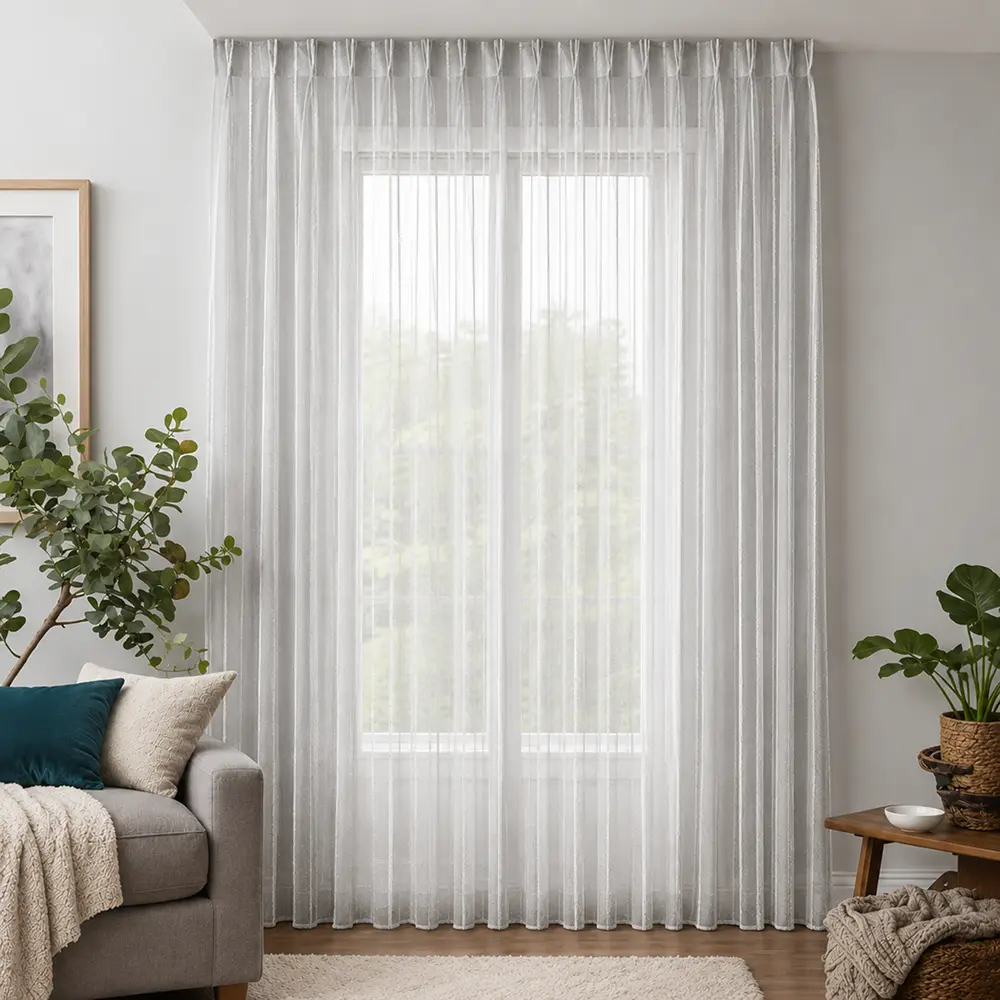
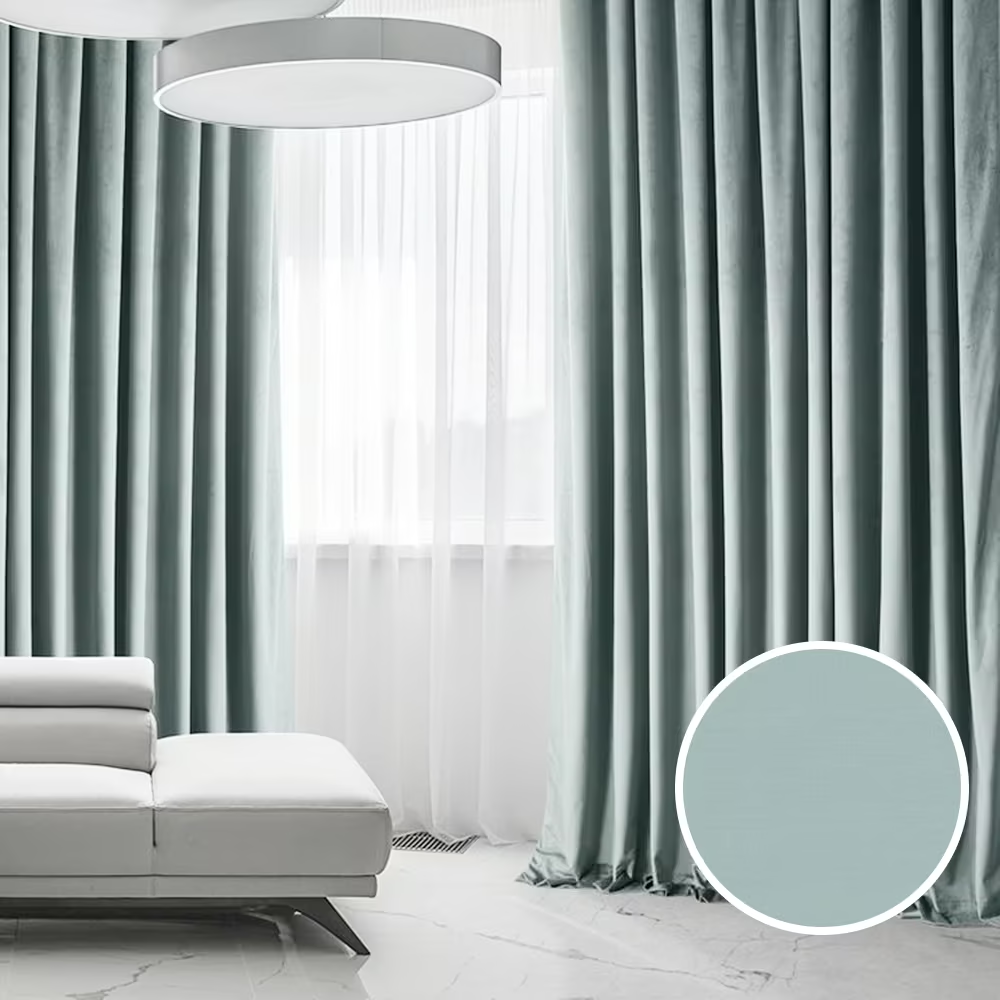
No single curtain layer can do all of this — which is why the double-track system (sheer on the inner track, heavier fabric on the outer track) is the standard specification for Dubai living rooms and not a premium upgrade. The two layers operate independently, giving the room the flexibility to respond to any condition: morning light (sheer only), afternoon direct sun (both drawn to reduce heat and glare), evening (outer layer drawn for privacy, sheer optional), night (both drawn for maximum privacy).
Understanding the specific light and heat challenges of your living room — its orientation, the time of day it receives direct sun, whether overlooking from neighbouring buildings is a concern, and what views you want to preserve — determines every subsequent curtain decision. The rest of this guide walks through each of those decisions in sequence.
Orientation: How Your Living Room's Direction Changes Everything
North-facing living rooms receive no direct sun in Dubai's latitude. They are naturally well-lit by soft, diffused light throughout the day — the best natural light quality for a living space. A sheer on the inner track and a medium-weight linen with standard lining on the outer track is typically sufficient. No blackout performance required on the outer layer (though many residents choose blackout-lined outer curtains for complete evening privacy).
East-facing living rooms receive direct sun from sunrise until approximately midday. In summer, sunrise before 5:30am means the room can be intensely lit from very early morning. A sheer layer handles the morning light for those who are up, while the outer layer can be drawn to extend morning comfort on weekends. East-facing rooms cool naturally through the afternoon as the sun moves away from the window — less of a heat gain problem than south or west-facing rooms.
South-facing living rooms receive direct sun through the middle of the day — the hottest, most intense period. In summer, this creates significant heat gain (a south-facing apartment window in July can reach 60–70°C on the exterior glass surface). A double-track system with a blackout or high-performance outer layer is strongly recommended. Standard linen without blackout lining on the outer track will be insufficient in a south-facing room in summer — the heat transmission through the fabric will still make the room uncomfortable.
West-facing living rooms are the most challenging in Dubai. They receive direct afternoon sun from approximately 1pm to sunset — the hottest part of the day, for the longest period, in a room typically used for afternoon and evening relaxation. West-facing living rooms in Dubai are frequently uncomfortable from 2–6pm without window treatment, regardless of air conditioning capacity. The double-track system with a high-performance outer layer is not optional here — it is the practical requirement for using the room comfortably through the afternoon.
The Double Track System: The Dubai Living Room Standard
A double track carries two independent curtain layers on the same window — an inner track (closer to the glass) and an outer track (closer to the room). Each layer can be drawn independently or together. This is the standard living room curtain specification in Dubai's premium residential market, and the reason is practical: no single curtain layer can simultaneously provide the light diffusion of a sheer (for daytime), the privacy of an opaque fabric (for evening), and the heat reduction of a blackout or heavyweight layer (for afternoon sun).
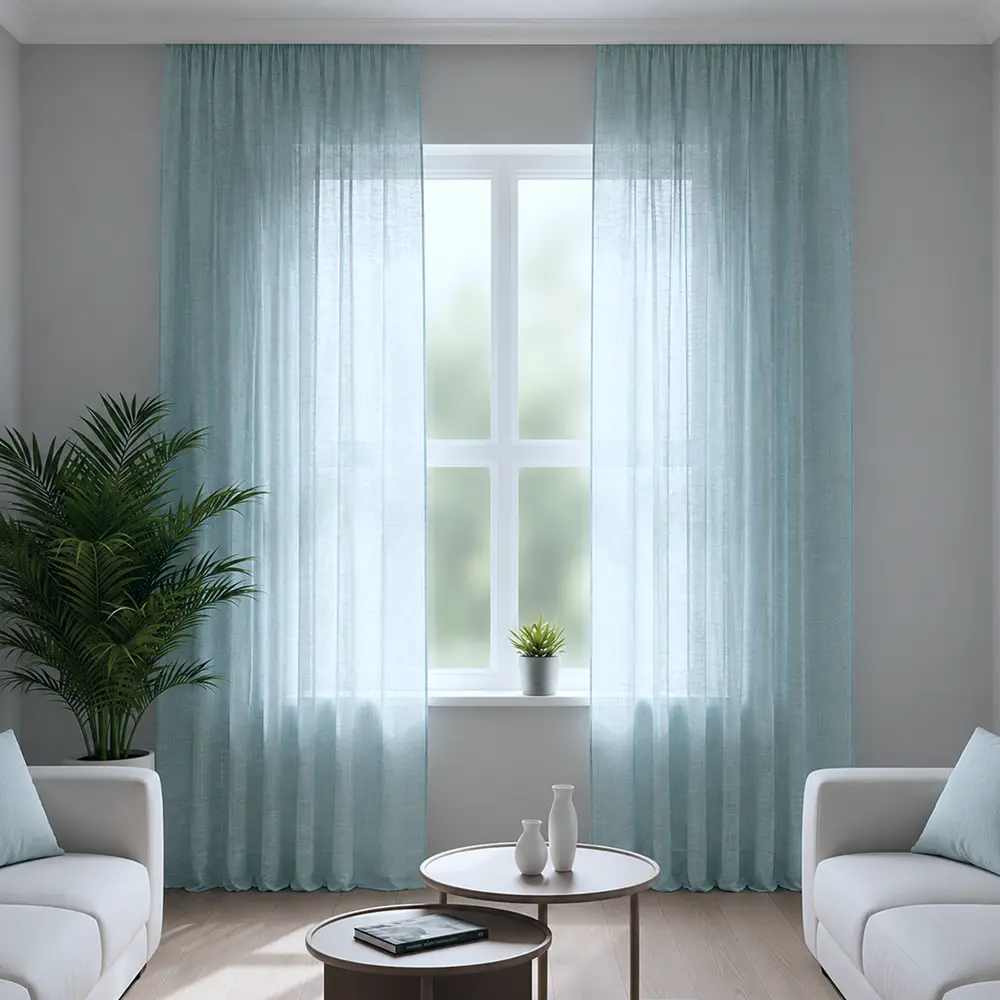
The most common Dubai living room double-track combination: an ivory or white sheer on the inner track (linen or polyester voile, wave or eyelet heading) and a natural linen or charcoal technical fabric on the outer track (medium-weight, standard or blackout lining, wave or eyelet heading). The sheer provides daytime light quality and privacy; the outer layer provides evening privacy and afternoon heat management.
Double tracks can be ceiling-mounted C-rail systems (the premium specification — allows wave heading on both layers, completely conceals the track, eliminates the top-of-window gap) or standard wall-mounted double poles (more common in retrofit situations — eyelet or pencil pleat heading, less expensive to install). For new Dubai apartments and villa refurbishments, ceiling-mounted C-rail is the specification we recommend for all living rooms with floor-to-ceiling windows.
The total cost of a double-track system with two curtain layers is roughly 60–80% more than a single-layer installation on the same window. This is often the right investment for a Dubai living room that is used daily and needs to perform across Dubai's full range of light conditions — from the soft morning light of a north-east-facing apartment to the aggressive afternoon glare of a west-facing marina view.
Fabric and Colour Choices for Dubai Living Rooms
The living room is the room where interior design choices have the most social visibility — it is the space presented to guests, photographed for rental listings, and experienced most by the household. Dubai's interior design market for living rooms is dominated by three aesthetic directions, each suggesting a specific curtain approach.
Contemporary minimalist (the dominant aesthetic in Dubai's new-build apartment market): natural or cream linen in wave heading on a ceiling-mounted C-rail, with an ivory sheer behind on the inner track. This is the specification found in the majority of premium Dubai show homes. It is neutral, timeless, and works with any colour palette or furniture choice. The wave heading creates the clean, hotel-like fold profile that defines contemporary Dubai interior design.
Transitional warm (increasingly popular in villa developments): warm-toned linen (sand, caramel, warm taupe) in eyelet or wave heading, paired with a natural sheer. Works with wooden furniture, rattan accents, and the warm neutral palette that is currently the leading interior direction across Dubai Hills, Arabian Ranches, and Jumeirah Park villa communities.
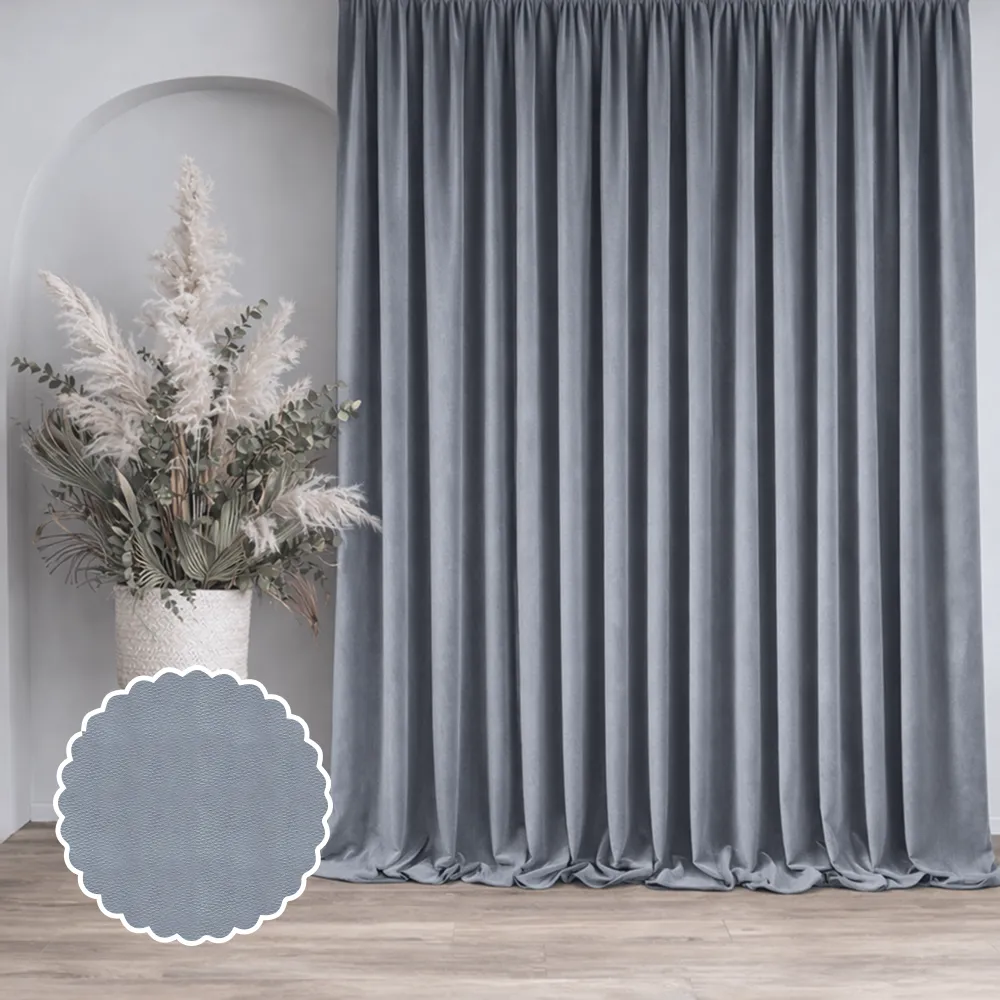
Statement luxury (penthouses, large villa formal rooms): charcoal velvet or jewel-toned velvet (emerald, deep teal) in pinch pleat or wave heading with interlining. Paired with an ivory sheer on the inner track. The combination of heavy velvet and sheer creates the most dramatic visual contrast available in a curtain treatment — appropriate for rooms with enough volume and ceiling height to support the visual weight.
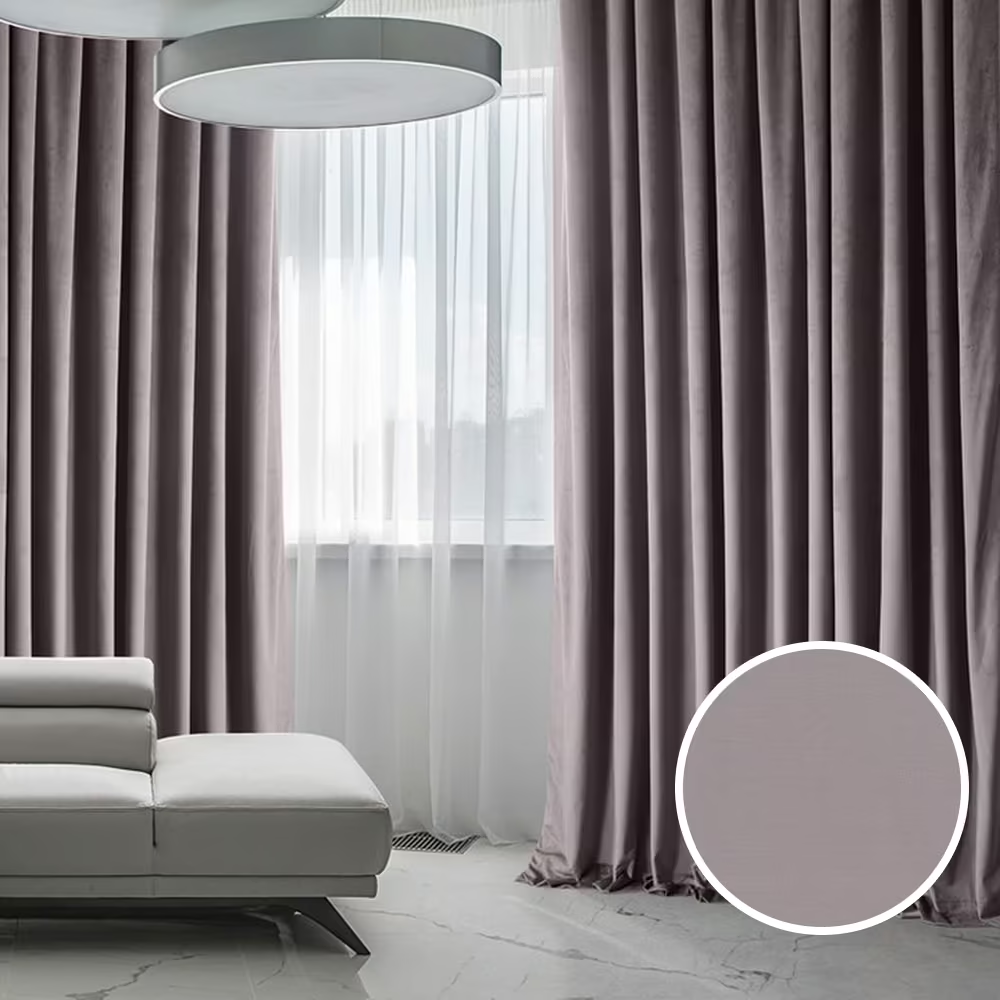
Floor-to-Ceiling Windows and Wide Spans in Dubai Living Rooms
Dubai's residential architecture is defined by large glazed surfaces — floor-to-ceiling windows are standard in most apartment developments built after 2010, and corner glazing and full-wall window walls are increasingly common in villa new-builds. These large windows are the defining design feature of the properties, but they create curtain challenges that standard retail advice doesn't address.
For a 4m wide floor-to-ceiling window in a Dubai Marina apartment (a typical configuration), the curtain brief includes: spans too wide for comfortable manual operation (each panel weighs 4–8kg fully drawn in medium-weight linen), floor-to-ceiling drop (typically 2.8–3.2m) that requires precise measuring and installation to achieve a floor-grazing or floor-puddling hem, and the need to preserve the sea or marina view when the curtain is open — which means a track system that stacks completely clear of the window opening, not one that partially overlaps the glazing on each side.
For spans over 2.5m: motorized operation is the practical answer. For precise floor-grazing hems: professional measurement is essential (a 10mm error in measuring creates an obvious gap or drag that is impossible to fix after installation without remaking the curtain). For maximum view preservation: a ceiling-mounted track with a generous stack-back allowance (the extra width needed for the curtain when open) positioned 30–40cm beyond the window edge on each side.
We measure every window precisely and account for stack-back in every quote for large Dubai living room windows. These details — which are often omitted in less careful installations — are the difference between a curtain that looks like the show home specification and one that looks like an afterthought.
- The double-track system (sheer inner, heavy outer) is the Dubai living room standard — no single layer can manage all conditions throughout the day
- West-facing living rooms are the hardest to manage in Dubai — afternoon direct sun from 1pm requires a blackout or high-performance outer layer
- Natural linen in wave heading on a ceiling-mounted C-rail is the most-specified living room combination in Dubai's premium residential market
- For window spans over 2.5m, motorized operation makes daily use practical — manual operation of a full-width heavy panel pair is genuinely demanding
- Stack-back calculation is critical for large windows — the curtain when open must clear the glazing completely to preserve the view that defines the property
- South and west-facing living rooms reduce their air conditioning load by 25–35% when an outer blackout or heavyweight layer is properly fitted and used through afternoon hours
Frequently Asked Questions
Get Expert Advice at Your Home — Free
Our specialist brings samples, measures every window, and gives you a written quote — no obligation.