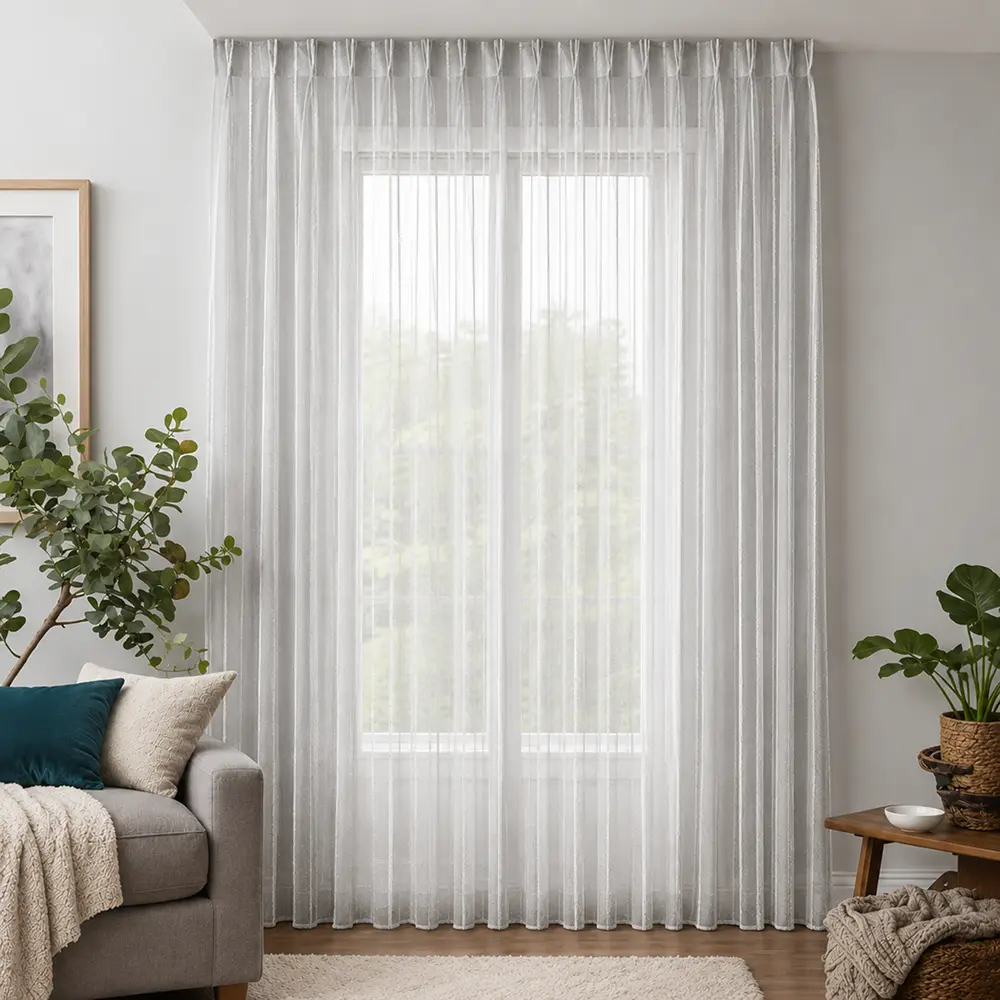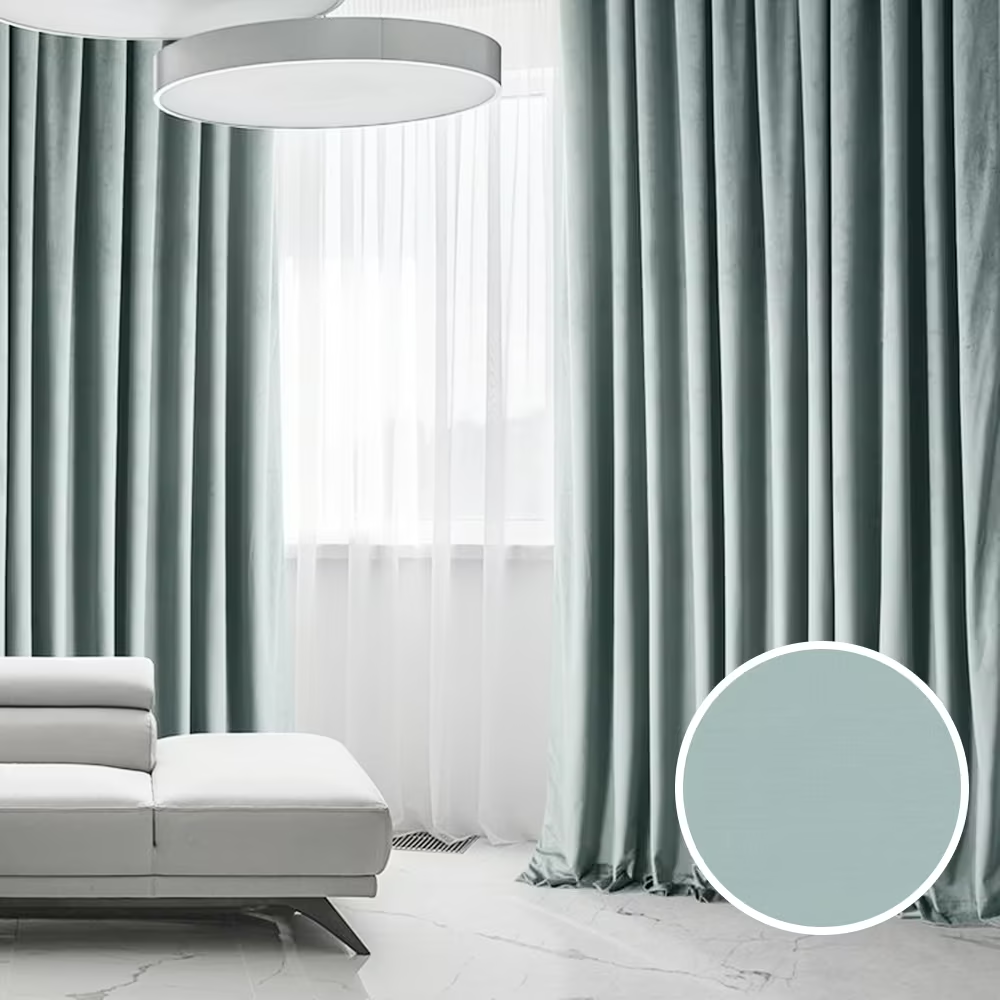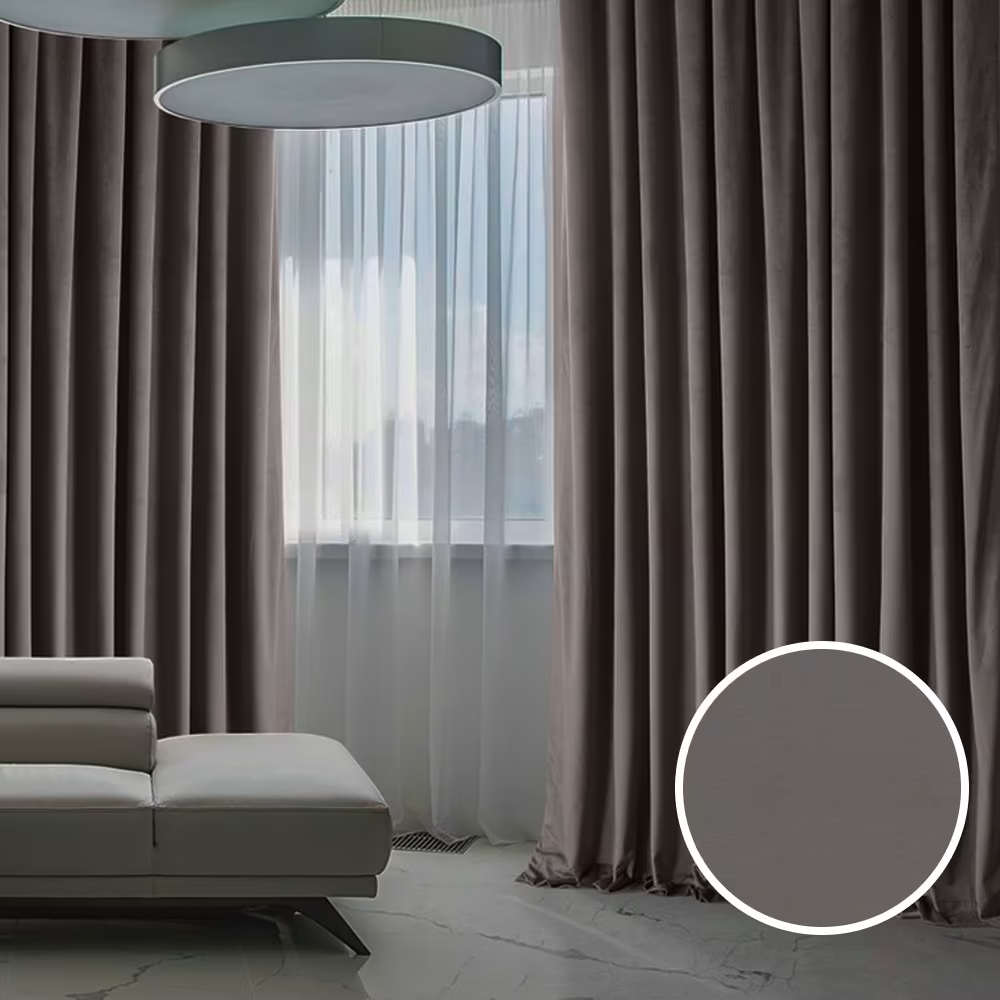
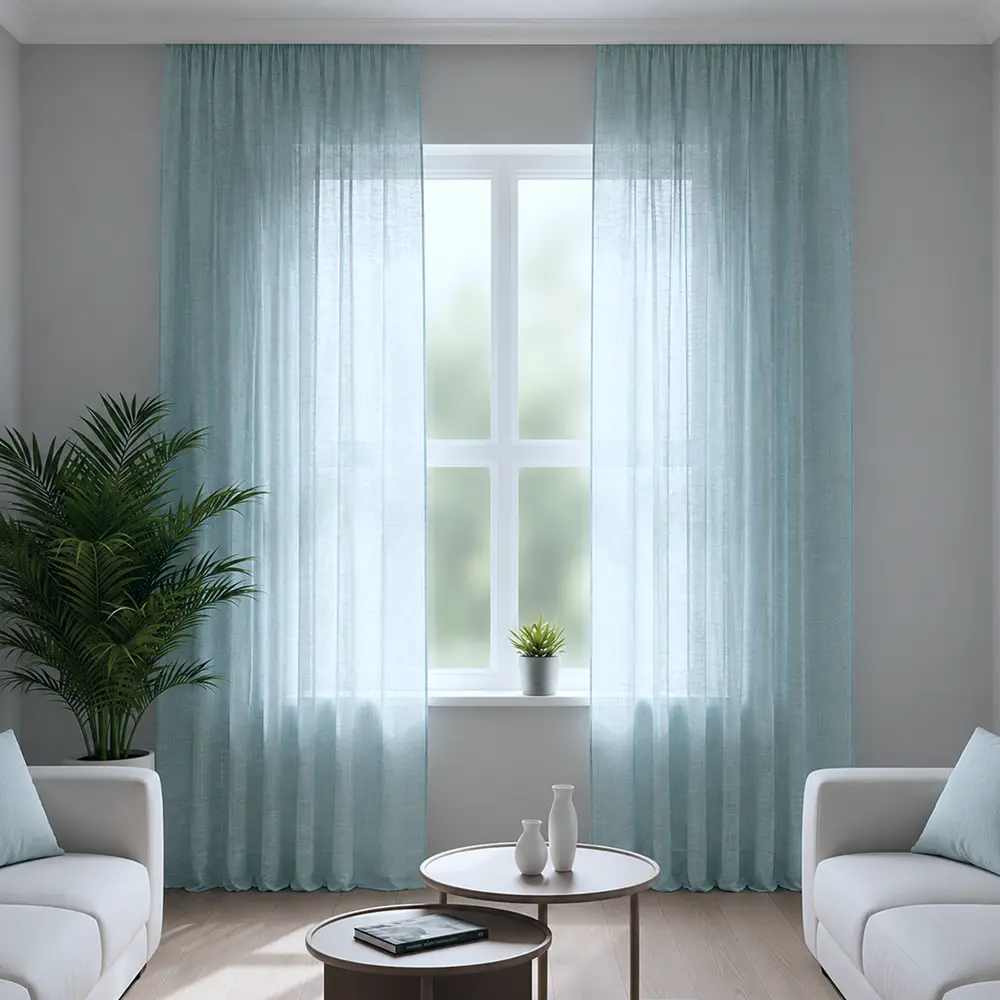
Layering curtains on a double track is the most versatile window treatment available for Dubai homes — letting you control light, heat, and privacy independently throughout the day. Here's how to do it properly.
Why Layering Makes Sense for Dubai Homes
A double-track curtain system uses two independent curtain layers on the same window — one sheer on the inner track (closer to the glass), one heavier fabric on the outer track (closer to the room). Each layer is drawn and opened independently. The result is a window treatment that can adapt to any light condition throughout the day without compromise: morning light (sheer only, full diffusion, view preserved); afternoon direct sun (both layers drawn, maximum heat reduction and glare control); evening (outer layer only for privacy, or sheer behind if the soft look is preferred); night (both layers closed for complete privacy and maximum insulation).
No single-layer curtain can replicate this flexibility. A blackout curtain drawn for afternoon shade also blocks the morning light entirely. A sheer drawn for daytime softening provides no privacy in the evening. Only a layered system gives you independent control of each function — and in Dubai, where the contrast between 6am soft light, 3pm aggressive afternoon sun, and evening privacy requirements is extreme, this flexibility is genuinely used every day.
This is why double-track systems are the default specification in Dubai's premium residential market — not an upgrade, but the practical minimum for any living room or bedroom with south or west-facing exposure.
Double Track Options: C-Rail, Double Pole, and Combined Systems
Ceiling-mounted double C-rail is the premium specification for any Dubai home where wave heading is the aesthetic choice. Two parallel steel C-rail tracks are ceiling-mounted — the inner track holds the sheer, the outer track holds the main fabric. Both can carry wave heading independently. The system sits flush with the ceiling, eliminating the gap above the curtain that causes light bleed and dust accumulation. The tracks are typically concealed behind a plaster cove or ceiling reveal in new builds; in existing properties they can be finished with a fascia board. This is the specification found in Dubai's show homes and the most demanding residential installations.
Double pole (bracket-mounted) is the practical retrofit solution. Two poles are mounted one behind the other on a double bracket — the inner pole carries the sheer, the outer the main fabric. Eyelet, pencil pleat, or tab top headings work on standard poles; wave heading does not. Double pole systems are the most commonly installed double track in occupied Dubai apartments because they require no ceiling work — the brackets fix to the wall above the window and can be fitted in any property without building works. The limitation is the gap between the pole and the ceiling, which allows light bleed at the top and collects dust more readily than a ceiling-mounted system.
Combined systems pair a ceiling-mounted C-rail for the main fabric (wave heading) with a standard inner sheer pole — a practical compromise that delivers wave heading on the outer layer (the more visible layer in most rooms) while using a simpler, less expensive inner track for the sheer. This is increasingly the specified combination in Dubai new-builds where wave heading is specified for the outer fabric but budget or ceiling conditions make a full double C-rail unnecessary.
Choosing the Right Sheer for the Inner Layer
The inner sheer layer has one primary job in a Dubai double-track system: transform Dubai's intense, direct sunlight into soft, even, comfortable ambient light — while maintaining the view from inside and privacy from outside during the day. Everything else (privacy at night, heat management, complete darkness) is handled by the outer layer.
The right sheer weight and weave for Dubai living rooms: lightweight enough to allow the maximum diffusion of natural light (too heavy a "sheer" becomes a room-darkening layer that defeats the purpose of the inner track), but enough structure to hang straight in air conditioning airflow without billowing or creasing. Natural linen sheers (180–220 gsm) are the premium option — they have enough body to hang straight while maintaining genuine light-diffusion quality, and their anti-static properties make them resistant to Dubai's fine dust. Polyester voile is the standard option — less expensive, available in every colour, and adequate for most living room applications provided a UV-stabilised version is specified.
Sheer colours for Dubai living rooms: ivory and natural white are the most popular by a significant margin. They create the warmest, most flattering interior light quality — Dubai's sunlight through an ivory sheer produces the same soft, gold-tinged quality found in the best boutique hotels. White sheers are slightly cooler in tone and suit more contemporary, minimal interiors. Coloured sheers (pale sage, dusty pink, soft grey) are available and add character, but require more care in selection because they tint the interior light in ways that affect the room's colour balance.
Choosing the Right Fabric for the Outer Layer
The outer layer in a Dubai double-track system handles privacy (evening and night), heat management (afternoon direct sun), and the dominant visual presence in the room when both layers are open (the fabric visible when the outer curtain is stacked to the side). It does most of the functional work and all of the interior design work — it is the curtain you see and the curtain that performs.
For north and east-facing Dubai living rooms: medium-weight linen with standard lining is typically sufficient. The afternoon sun is not direct (north) or has passed by afternoon (east), so heat management demands are lower. Privacy and aesthetics are the main outer layer considerations.
For south and west-facing Dubai living rooms: the outer layer should have meaningful light and heat reduction performance. Options in order of performance: standard-lined medium linen (40–50% heat reduction when drawn), blackout-lined linen (60–70% heat reduction), technical blackout fabric (maximum heat reduction). For most south/west-facing living rooms in Dubai, blackout-lined linen is the right balance — you get the aesthetic of linen with performance meaningfully above standard lining, without the visual heaviness of a full technical blackout outer layer.
Outer layer fabric weight: heavier fabrics (medium to heavyweight linen, velvet) stack more elegantly at the sides of the window when open — the drape creates a frame around the window that looks intentional and architectural. Lighter fabrics in the outer layer can look flat when stacked to the side. This is a consideration for rooms where the curtain is open most of the time and the "open" appearance matters as much as the drawn appearance.
Installation: Getting the Layers Right
The difference between a double-track system that works beautifully and one that creates daily frustration is mostly in the installation details — the specific measurements and positioning decisions that a professional fitting team gets right and a DIY installation frequently doesn't.
Track width: both the inner and outer tracks should extend 25–35cm beyond the window on each side. This allows both layers to stack completely clear of the window when open (preserving the view and maximising natural light in the morning), and ensures the fabric closes fully past the window edge on each side when drawn (minimising edge light bleed and improving privacy).
Drop: for floor-to-ceiling installations (the standard in Dubai), the drop is measured from the track to the finished floor level, minus 1–2cm for a clean, just-clearing hem. The sheer and outer layers can have the same drop or the outer layer can be 1–2cm longer — a styling choice rather than a technical one.
Sheer fullness: sheers typically need more fullness than outer fabrics — 2.5× the track width is recommended for a rich, gathered sheer appearance. For the outer layer: 2.0–2.3× for wave, 2.5× for eyelet and pencil pleat.
Spacing between inner and outer track: for a ceiling-mounted double C-rail, the two tracks should be spaced 8–12cm apart. Too close and the outer fabric brushes the sheer when drawn; too far and the system looks shallow and doesn't create the layered depth effect that makes double-track systems so visually effective.
- A double-track system gives independent control of light diffusion (sheer), heat management, and privacy — no single layer can do all three
- Ceiling-mounted double C-rail is the premium specification — no top light gap, wave heading possible on both layers
- If motorization is planned, install C-rail from the start — retrofitting a motor onto a standard pole is not possible
- Sheer inner layer: ivory or natural white linen sheer for warmest light quality; UV-stabilised polyester voile for budget applications
- South and west-facing living rooms need a blackout-lined or high-performance outer layer — standard lining is insufficient for afternoon heat management
- Track width should extend 25–35cm beyond the window on each side — this allows full stack-back and eliminates edge light bleed
Frequently Asked Questions
Get Expert Advice at Your Home — Free
Our specialist brings samples, measures every window, and gives you a written quote — no obligation.