Linen is the most purchased curtain fabric in Dubai by a wide margin — available in every lining, resistant to dust and static, and naturally suited to the UAE's climate. Here's everything you need to know.
Why Linen Works So Well in Dubai
Natural linen is the most purchased curtain fabric in Dubai, and the reasons why are specific to this market rather than a reflection of global trends. Dubai's environment — a combination of intense heat, low humidity, regular sandstorms, and near-constant air conditioning — creates conditions that interact with curtain fabrics in ways that aren't obvious until you've lived with them for a season.
Linen's defining property in the Dubai context is its relationship with static electricity. Synthetic fabrics — polyester, polypropylene, viscose blends — generate static charges that actively attract the fine dust particles that are a constant feature of Dubai's air. A synthetic curtain in a Dubai apartment will accumulate visible dust within weeks of installation, particularly during the Shamal wind seasons when desert dust is carried into the city in large quantities. Natural linen generates virtually no static and therefore does not attract dust in the same way — it stays cleaner for longer and maintains its appearance across seasons without frequent washing.
Linen is also genuinely temperature-moderating in a way that synthetic fabrics are not. Near a hot window in direct sun, linen feels cooler to the touch than a polyester fabric of the same weight — a property that emerges from the natural hollow fibre structure of the flax plant. In a room where the window receives direct afternoon sun and the air conditioning is working against constant solar heat gain, the fabric closest to the glass that is naturally cooler creates marginally better conditions than the alternative. It is a small effect in absolute terms, but it is real and measurable.
Understanding Linen Weights and Weaves
Linen fabric weight is measured in grams per square metre (gsm), and the weight determines how the fabric hangs, how much light it filters, and how effective it is with different lining options. Understanding the range helps you make the right choice for each room in your Dubai home.
Lightweight linen (180–280 gsm) creates a soft, flowing hang with a slightly translucent quality when unlined. It is the most popular choice for living room sheers and sheer-plus-voile applications where the goal is maximum light diffusion and a floaty, relaxed aesthetic. At this weight, linen behaves almost like a structured voile — particularly in Belgian or Irish fine-weave linen. Because it is lightweight, it takes wave heading well in its unlined form.
Medium-weight linen (280–380 gsm) is the workhorse of the Dubai curtain market — the weight that most people mean when they say "linen curtains". It has enough body to hold wave or eyelet heading, enough opacity in its natural undyed state to provide meaningful daytime privacy when unlined, and enough structure to carry a blackout or thermal lining without the panel becoming excessively heavy. This is the weight range from which most living room and bedroom linen curtains in Dubai are made.
Heavyweight linen (380 gsm+) includes slub linen, woven texture linen, and European heritage-weight fabrics. At this weight, linen becomes significantly more insulating and acoustically absorbent. It does not drape as freely as lighter weights — it tends to hold a more structured, sculptural fold — but it creates a significant presence in a room. Heavyweight linen with interlining is one of the best-performing curtain specifications for energy efficiency in a Dubai villa, comparable to interlining in any other fabric at this weight.
Lining Options for Linen Curtains in Dubai
One of linen's key advantages in Dubai is that it takes every standard lining option — and the lining choice is the main lever for controlling the functional performance of the finished curtain.
Unlined linen creates the most natural, relaxed drape. The fabric hangs freely, moves gently in air conditioning airflow, and allows a small amount of diffused light through even in medium weights. Unlined linen is the right choice for living room sheer applications, for rooms with good natural privacy from neighbouring buildings, or where a casual, organic aesthetic is the priority. In Dubai, unlined linen should not be used for bedrooms or for south/west-facing windows that receive intense direct afternoon sun.
Standard lining adds body, improves drape, and significantly increases the fabric's lifespan by protecting the face fabric from UV degradation. Standard lining converts a "nice" linen curtain into a functional one that will maintain its appearance for a decade or more in Dubai's sun-intensive conditions. It also meaningfully improves daytime privacy in lower-floor apartments. For living rooms and dining rooms in Dubai, standard-lined linen is the baseline recommendation.
Blackout lining is by far the most popular lining choice for bedroom linen curtains in Dubai. The coated blackout layer (applied between the face fabric and the sateen backing) is invisible from the front — the room sees only the linen face fabric, and the functional specification is delivered by the layer behind. The combination of linen face fabric and blackout lining is the most frequently requested bedroom curtain specification we supply to Dubai clients at every price point.
Interlining adds a layer of cotton or polyester wadding between the face fabric and the lining. The effect is significant: the curtain becomes substantially heavier (which improves acoustic performance), the drape becomes richer and more sculpted, and the thermal performance increases by reducing both heat gain in summer and heat loss in winter (less relevant in Dubai's mild winters, but meaningful for 9 months of intensive air conditioning). Interlined linen with blackout lining is the specification found in the highest-performing curtain installations across Dubai's luxury villa market.
Colour and Styling: Linen in Dubai Interiors
Linen's natural undyed colour range — from pale ivory through warm oat, sand, and mid-taupe to deeper natural tones — is intrinsically suited to the Dubai interior palette. Dubai's interior design aesthetic, particularly in premium villa and apartment developments, frequently references the desert landscape: warm neutrals, natural textures, low-reflectance finishes, and materials that have an organic rather than industrial quality. Linen sits in the centre of this aesthetic naturally, which is a significant part of why it has become the default fabric choice across the Dubai residential market.
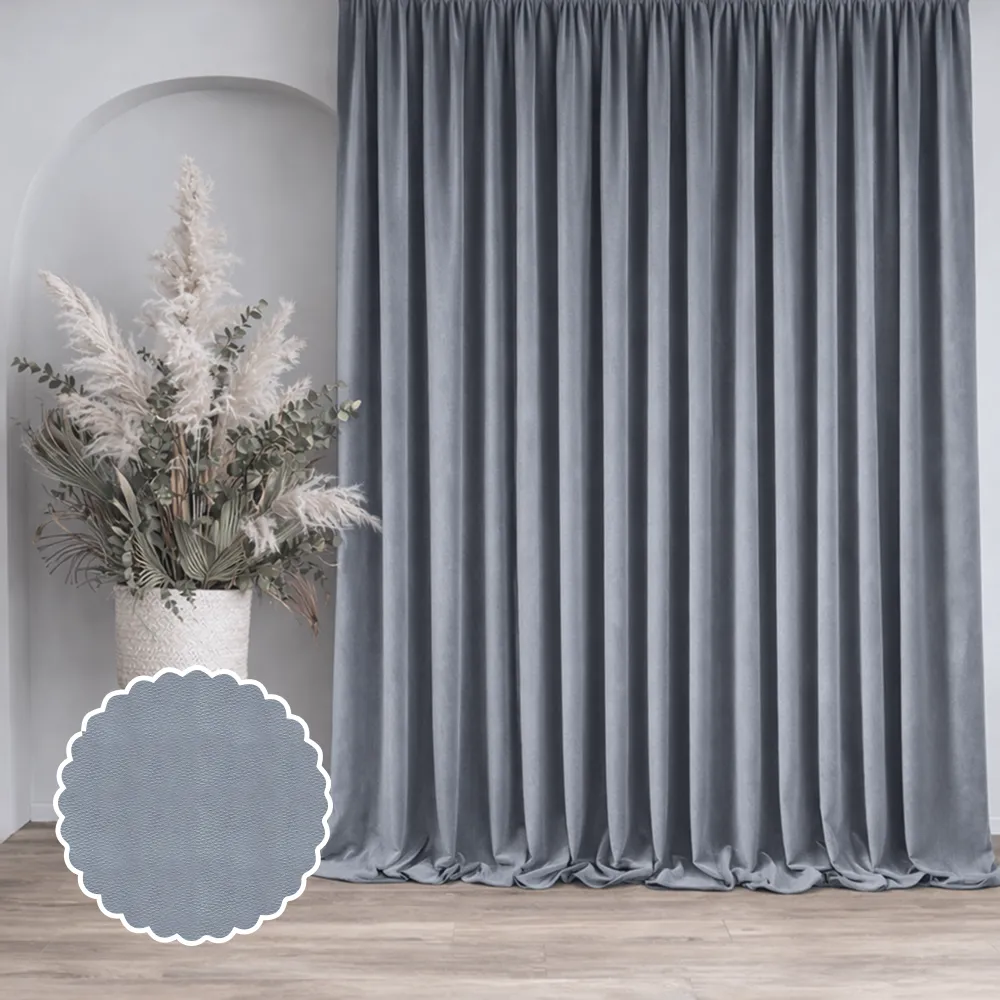
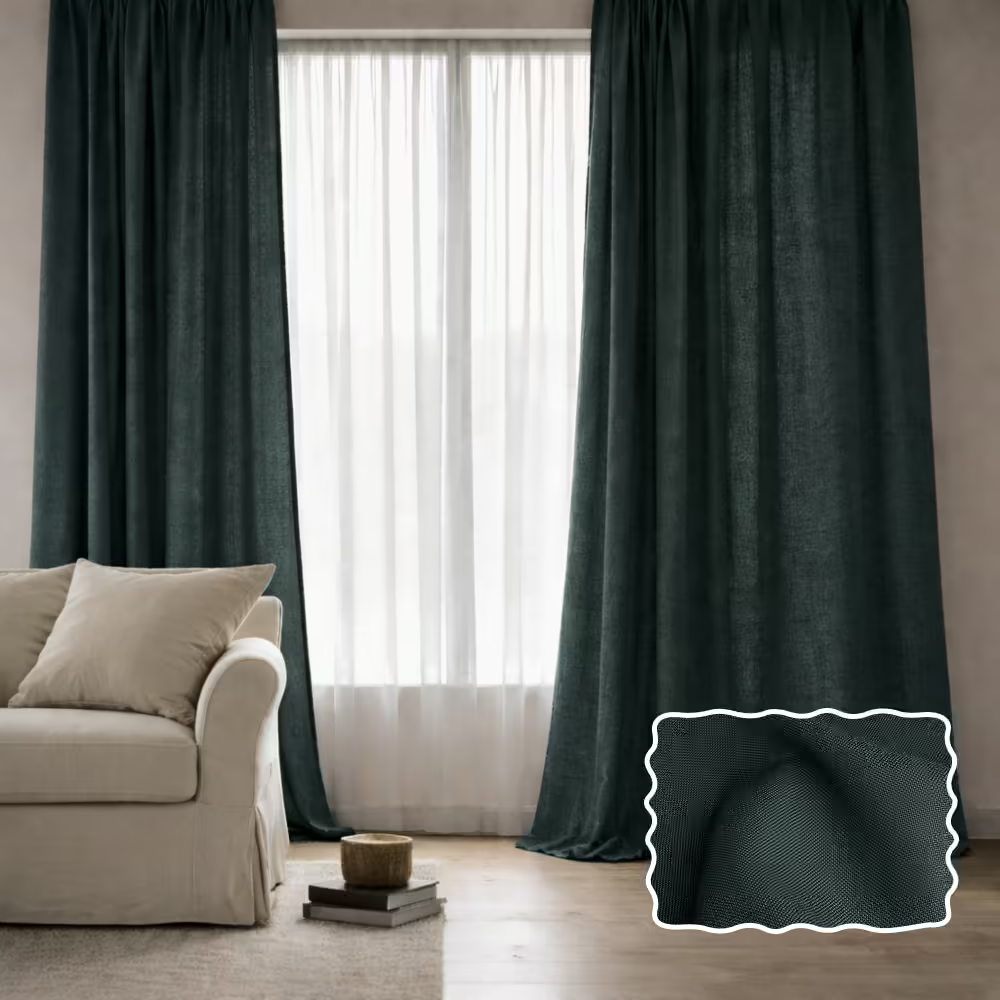
Beyond naturals, linen is available across the full colour spectrum in dyed and printed versions. The most popular non-natural linen colours in Dubai's current market are: dusty sage (a muted green-grey that references biophilic design and works with both warm and cool interiors), charcoal (the darkest functional linen, used primarily in wave heading for bedrooms and formal sitting rooms), and soft slate (a mid-tone grey with a slight blue bias that photographs beautifully and works in Dubai's high-light interior environment).
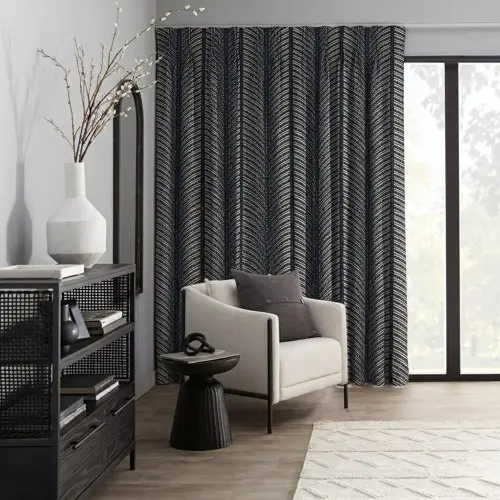
Patterned linen — woven geometric patterns, subtle stripes, tone-on-tone textures — is a growing category in Dubai's residential market as clients look to add personality beyond the plain fabric. Woven patterns (where the pattern is integral to the fabric construction rather than printed onto it) are the better choice for Dubai: they are more UV-resistant, the pattern doesn't fade, and they retain their texture and character for significantly longer than printed alternatives in the high-sun environment.
Care and Maintenance of Linen Curtains in Dubai
Linen's reputation for being high-maintenance is largely undeserved, particularly for lined curtains in Dubai. The face fabric of a well-lined linen curtain rarely requires washing — the lining protects it from most of the dust and environmental contamination that accumulates in Dubai. For most Dubai homes, a bi-annual professional steam clean of the curtains in situ (the curtains remain on the track and are steam-cleaned in place) is the appropriate maintenance routine. This takes 30–45 minutes per room and restores the fabric's fresh, clean appearance without the risks associated with machine washing lined curtains.
For unlined linen or lightweight linen panels that do require washing, most natural linen curtain fabrics can be cold-machine-washed and hung to dry. The characteristic of linen is that it wrinkles easily when machine-washed, and requires either ironing or careful hanging (smoothing the fabric while damp and allowing it to dry on the track or a smooth rod) to maintain its appearance. Pre-washed linen — which many quality fabric mills offer as a standard treatment — has been pre-shrunk and pre-crinkled, making it significantly easier to maintain and more resistant to visible wrinkling in use.
- Linen generates no static, so it doesn't attract Dubai's desert dust the way synthetic fabrics do
- Medium-weight linen (280–380 gsm) is the Dubai market standard — versatile enough for every lining option
- Blackout-lined linen is the most popular bedroom curtain combination in Dubai by a wide margin
- Interlining adds acoustic performance and significantly improves thermal efficiency for 9 months of air conditioning
- Woven linen patterns last significantly longer than printed ones in Dubai's UV-intensive environment
- Most lined linen curtains only need bi-annual steam cleaning — the lining protects the face fabric from dust and UV
Frequently Asked Questions
Get Expert Advice at Your Home — Free
Our specialist brings samples, measures every window, and gives you a written quote — no obligation.