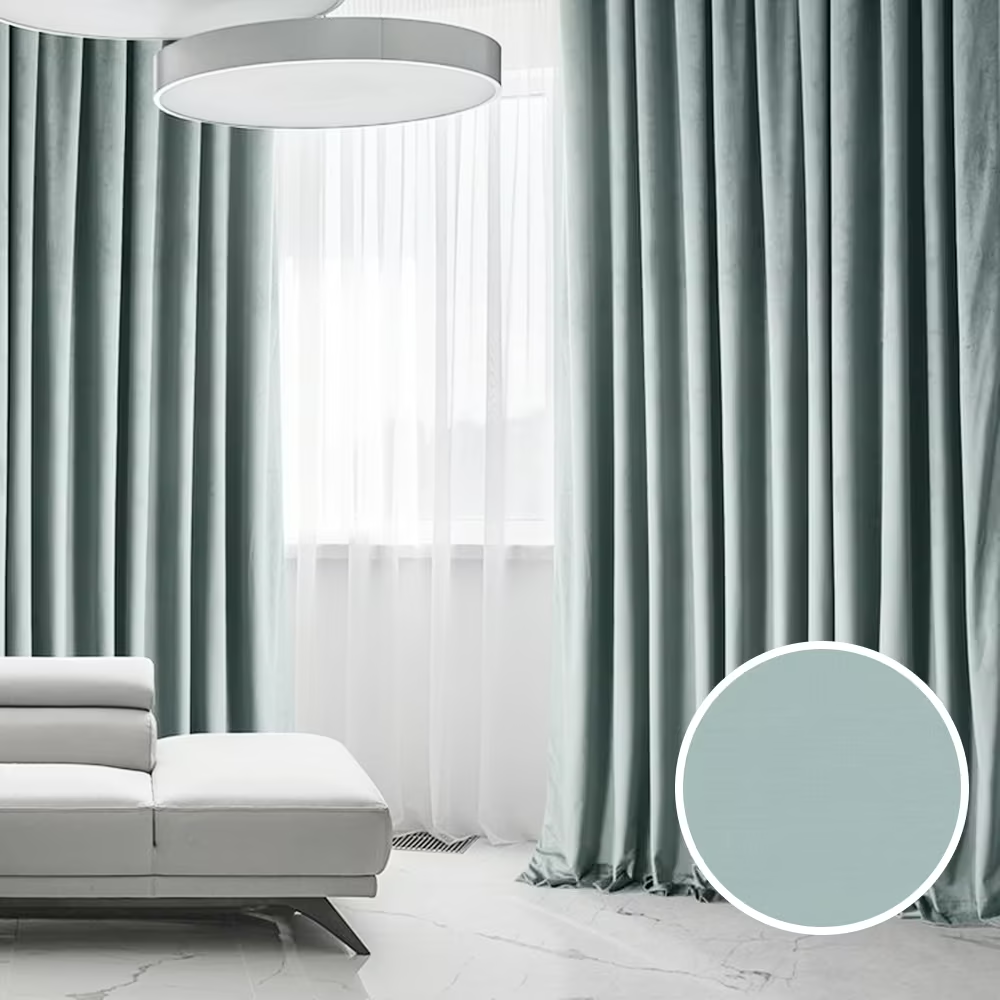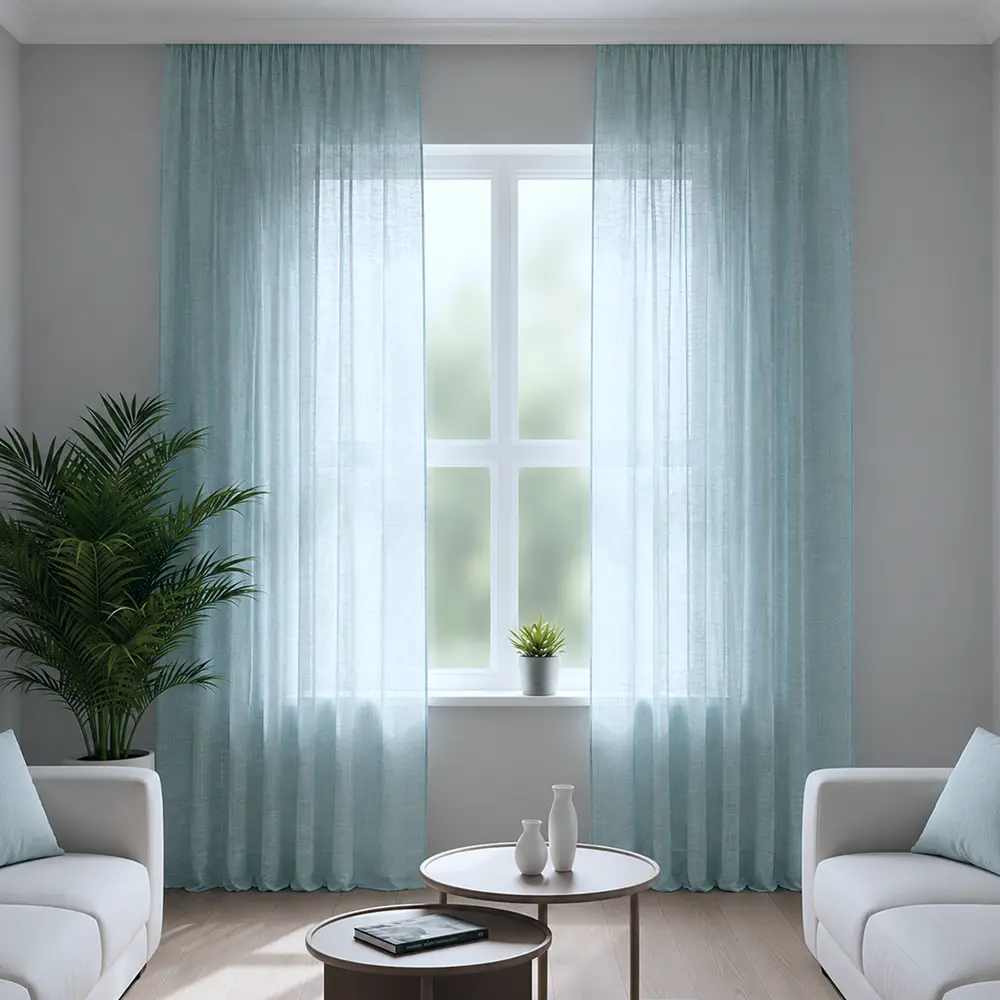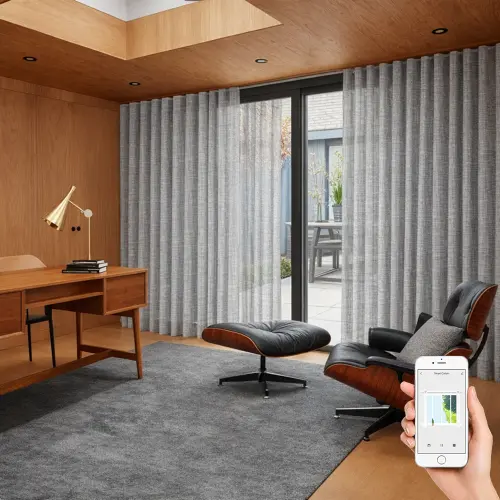
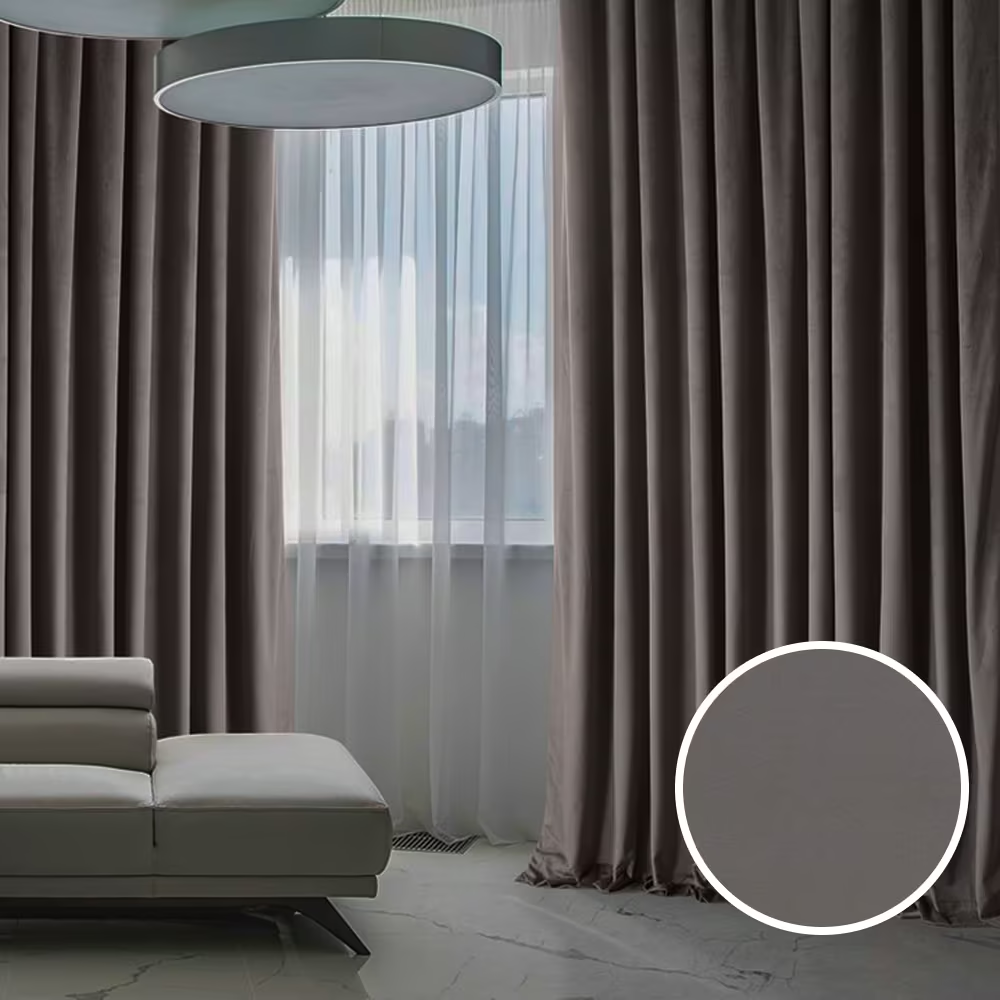
Dubai Marina's high-floor apartments, floor-to-ceiling windows, and west-facing sea views create a specific curtain brief that general advice doesn't cover. Here's what actually works in Marina properties.
What Makes Dubai Marina Apartments Different for Curtains
Dubai Marina is one of the largest urban waterfront developments in the world — 94 towers across a 3.5km artificial canal, with a residential population that makes it one of the most densely inhabited square kilometres in the UAE. The properties share a set of characteristics that create a specific and demanding curtain brief: floor-to-ceiling glazing on most units (particularly those built after 2005), predominantly west and south-west orientations that face the marina water or the Arabian Gulf, very high floors (towers range from 30 to 90 floors), and a combination of sea and city views that residents specifically chose and paid a premium for.
These characteristics translate into specific curtain requirements: the floor-to-ceiling glass that creates the views also creates intense solar heat gain from the afternoon sun; the west-facing orientation means the most uncomfortable sun exposure hits in the late afternoon when the apartment is most likely to be occupied; the high floors mean there is no natural shade from neighbouring buildings; and the views — sea, marina water, yachts, JBR beach — need to be preserved as much as possible even while managing the light and heat.
The curtain that solves all of this is not a single heavy fabric. It is a carefully specified double-track system, with a sheer that preserves the view and softens the light when conditions allow, and an outer layer that provides genuine heat reduction and privacy when the afternoon sun is at its most intense. Getting both layers right for the specific orientation and floor level of the apartment is what our Marina specialists do on every home visit in this community.
The West-Facing Marina Challenge — and How to Solve It
The majority of Dubai Marina's premium units face west or south-west — towards the marina water, the Arabian Gulf, and the JBR beachfront. This orientation delivers the most valued views in the development, but it also means that from approximately 1pm to sunset (8pm in June, 6:30pm in January), the apartment receives direct, intense afternoon sun that can raise interior temperatures significantly even with air conditioning running.
On a high floor with no neighbouring buildings for shade, a west-facing Marina apartment in July receives solar radiation of 700–900 W/m² on the glass surface during the most intense afternoon hours. This is 7–9 times the solar radiation at which a standard AC unit is designed to maintain comfort. Air conditioning can compensate, but at significant energy cost. A well-specified outer curtain layer — drawn from midday to 6pm on the hottest summer days — reduces that solar gain by 30–40% and dramatically reduces the AC load through those windows.
The curtain that achieves this without sacrificing the view: a blackout-lined linen or technical blackout outer layer on the outer track, drawn from midday onwards on direct-sun days. The sheer inner layer remains in place — the view through the sheer is maintained (soft, diffused, but visible), the external glare is managed, and the room temperature is significantly more comfortable. When the direct sun passes (typically by 5:30–6pm), the outer layer opens again and the full marina view is available through the evening.
Preserving Marina and Sea Views While Managing Light
The reason Dubai Marina residents pay a premium for their apartment is the view. A curtain system that manages light and heat by blocking the view is not a solution — it is a different problem. The goal is to have both: the view, and the light management.
The sheer inner layer on a double track does this during daylight. A well-chosen ivory or natural linen sheer on the inner track filters the intense direct light into a soft, even interior quality — reducing glare to a comfortable level while maintaining visibility through the window. From inside the apartment, you can see the marina, the yachts, the JBR skyline through the sheer. From outside, the interior appears dark (the high exterior light intensity makes the interior invisible even through the sheer fabric — daytime privacy is maintained without the curtain having to be opaque).
The outer layer is drawn only when the direct sun makes the sheer insufficient — typically on the hottest afternoon hours in summer. When drawn, it blocks the view. When open (stacked to the sides of the window), the view is fully unobstructed. The track must be specified with enough stack-back clearance that the fabric, when open, sits entirely outside the window frame — for a 3.5m window, this typically requires 35–45cm of clear wall space on each side, which most Marina apartments provide.
High-Floor Apartment Considerations
Marina apartments above the 30th floor have specific curtain characteristics that differ from lower floors. At these heights, there is typically no overlooking from neighbouring buildings — privacy from outside is rarely a concern during daylight hours. The curtain brief simplifies: light management and heat reduction are the main functions; privacy (a major concern on lower floors) is secondary.
At high floors, the quality of the light is also different. The atmospheric haze that softens and colours Dubai's low-level light (the yellow-orange tone visible from street level) is absent at 40+ floors. The light at this elevation is more direct, cleaner, and harsher — more UV, more heat, more glare. The sheer specification needs to account for this: a sheer that provides comfortable diffusion on the 10th floor may be inadequate at the 40th floor of the same building where the light intensity is higher.
Wind is another factor. Marina towers above 30 floors experience wind levels that can cause balcony glass doors to vibrate slightly — and this vibration transmits to curtain panels on a poorly mounted track. A ceiling-mounted C-rail, fixed into the concrete ceiling slab at correct intervals, eliminates the track flex that causes audible rattle during windy periods. Many Marina residents who have previously experienced noisy curtain tracks in windy weather specifically request C-rail ceiling fixing on this basis.
Our Work Across Dubai Marina — What We Typically Specify
We have fitted curtains in over 200 Marina apartments across the development's towers — from JBR-facing units in Princess Tower to marina-view apartments in Cayan, Sulafa, and Torch. The most commonly specified combination across Marina properties in 2025–2026 is:
Living room: ivory linen sheer (220 gsm, wave heading, inner C-rail track) + natural or charcoal linen with blackout lining (wave heading, outer C-rail track, ceiling-mounted). Motorized outer layer on windows over 3m wide. Track extends 35cm beyond window on each side.
Master bedroom: charcoal or navy linen with three-pass blackout lining, wave heading, ceiling-mounted C-rail, motorized. Track extends 30cm beyond window on each side, ceiling-mounted to eliminate top light gap. The bedroom specification is the most consistent across Marina properties because the requirement — complete blackout, every morning — is the same regardless of which tower or which floor.
Second bedrooms and studies: natural or cream linen with blackout lining, eyelet heading on a standard pole. More cost-effective than wave for rooms where the everyday view of the heading is less critical than in the master bedroom or living room.
Lead time from home visit to installation for a standard Marina 2-bedroom apartment: 7–14 working days for fabric production, 1 installation day. We handle building access and coordinate with tower management for any ceiling drilling required.
- West-facing Marina apartments receive intense afternoon sun from 1pm to sunset — a double-track with blackout outer layer is the practical solution
- Sheer inner layer preserves the marina view during daylight while managing glare — from outside, the interior is private even through the sheer fabric
- High floors (30+) have more direct, harsher UV light than lower levels — sheer specification should account for this increased intensity
- Ceiling-mounted C-rail eliminates track flex and rattle caused by wind vibration — a specific concern in Marina towers above the 30th floor
- Track should extend 35–45cm beyond the window on each side for full stack-back — the fabric when open must clear the window completely
- Motorized outer layer strongly recommended for Marina apartments with west-facing windows over 3m wide — daily manual operation is impractical
Frequently Asked Questions
Get Expert Advice at Your Home — Free
Our specialist brings samples, measures every window, and gives you a written quote — no obligation.