
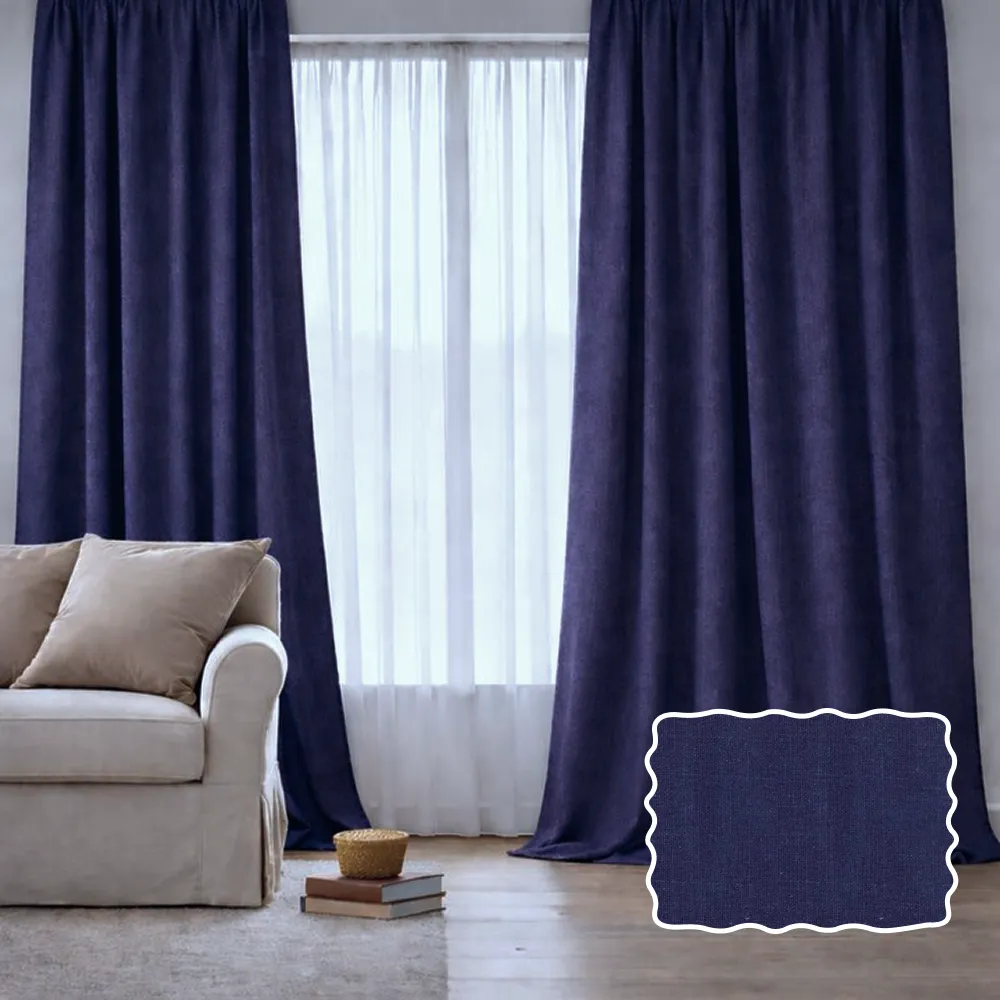
Incorrect measuring is the most common reason curtains don't look right in Dubai homes. Get it right the first time with this step-by-step guide covering width, drop, and the specific considerations for Dubai's floor-to-ceiling windows.
Why Measuring Matters — and Why Dubai Makes It Harder
Made-to-measure curtains are manufactured to the exact dimensions provided at the time of order. There is no standard size to fall back on if the measurements are wrong — a curtain made to an incorrect width or drop cannot be exchanged or resized in most cases without the cost of remaking the entire panel. Getting the measurements right the first time is the single most important step in the curtain process, and it is more critical in Dubai than in most other markets for two reasons.
First, Dubai's floor-to-ceiling windows leave no margin for error. A 5mm error in measuring a sill-length curtain in a European context results in a negligible gap or drag at the floor. The same 5mm error in a 3.2m floor-to-ceiling curtain in a Dubai apartment is barely visible. But a 15–20mm error — which occurs regularly when measuring from an unstable position, measuring to the wrong reference point, or not accounting for the track's finished position — results in a gap between curtain and floor (looks unfinished) or a curtain that drags excessively (wears the fabric at the hem). At 3m+ drops, the visual consequences of a measurement error are significantly more pronounced than at standard 2.4m heights.
Second, Dubai's track and pole systems include ceiling-mounted C-rails, concealed fixings, and custom pelmets that are not present in the standard measuring guides written for UK or US markets. The measurement reference point for a ceiling-mounted C-rail (the top of the track carrier, which hangs below the ceiling) differs from the reference point for a wall-mounted pole (the bottom of the ring). Using the wrong reference creates a systematic error in every panel.
What You Need Before You Measure
Measure curtains with a steel tape measure — not a fabric tape, not a laser measure for the primary measurements. A steel tape gives precise, consistent readings and doesn't flex or stretch across the width of a large window. For very wide windows (3m+), a helper holding one end of the tape prevents the tape from sagging and introducing an error into the width measurement.
You need to know — before measuring — where your track or pole will be positioned. If you don't have a track yet, the measurement depends on where you intend to position it. If you are ordering track and curtains together (the correct approach for any new installation), the track position is part of the design consultation — the width and height of the track determines the curtain dimensions, not the other way around. Measuring curtains before deciding where the track goes is a common mistake that results in curtains that are the right size for the wrong position.
Decide on your hem style before measuring: floor-grazing (1–2cm above the floor), break (curtain rests on the floor with a gentle fold — 5–8cm excess), or puddle (a deliberate excess that pools on the floor — 20–30cm excess). Each requires a different drop measurement from the same starting point. The hem style changes the total drop, and therefore the fabric requirement and the finished look.
Measuring the Width: Track Width vs Window Width
The curtain width is measured from the track or pole — not from the window frame. This is one of the most common measuring mistakes, and it systematically produces curtains that don't cover the window fully when drawn. The track should extend beyond the window frame on each side (typically 20–35cm depending on the room, the wall space available, and how much stack-back clearance is needed), so the curtain width is always larger than the window width by a meaningful amount.
If the track is already fitted: measure from end to end of the track (for a pole, measure the usable pole length between the end brackets or finials). This is the finished track width. The curtain fabric width is this measurement multiplied by the heading fullness ratio.
If the track has not yet been fitted: decide on the desired track position first. Measure the window frame width. Add 25–35cm on each side for stack-back and light bleed prevention. The resulting figure is the track width you should order. The curtain fabric width is this track width multiplied by the heading fullness ratio.
Heading fullness ratios (fabric width ÷ track width):
- Wave heading: 2.0–2.3× (e.g. 3m track → 6.0–6.9m of fabric across both panels)
- Eyelet heading: 2.0–2.5×
- Pencil pleat: 2.5–3.0×
- Pinch pleat: 2.5–2.8×
- Sheer inner layer: 2.5–3.0× (sheers look best with more fullness than the outer fabric)
For a pair of curtains (two panels), the total fabric width is divided equally between the two panels. A 3m track with pencil pleat heading (2.5× fullness = 7.5m total fabric) requires two panels of 3.75m each. Each panel covers half the track when closed, with overlap in the centre.
Measuring the Drop: From Track to Floor
The drop measurement is taken from the hanging point of the curtain at the top of the heading down to the intended hem position. The hanging point differs depending on the heading and track type:
Eyelet heading: measure from the top of the pole (the point through which the eyelet slides). The curtain heading sits below the pole, so the finished curtain height begins approximately 3–5cm below the top of the pole.
Wave heading on C-rail: measure from the top of the curtain carrier (the carrier sits in the track groove and the curtain clips to the carrier). In a ceiling-mounted system, this is typically 1.5–3cm below the ceiling surface.
Pencil pleat on track with hooks: measure from the top of the hook point (where the hook slots into the track runner). The curtain tape folds to position the hook at the top of the fabric, so the curtain heading begins at the hook level.
Pinch pleat with rings on pole: measure from the bottom of the ring (the ring sits on the pole and the curtain hook attaches to the ring). The curtain heading begins below the ring.
From the hanging point measurement, add the hem allowance based on your chosen hem style:
- Floor-grazing (1–2cm clearance): drop = floor-to-hanging-point distance MINUS 1–2cm
- Break (soft fold on floor): drop = floor-to-hanging-point distance PLUS 5–8cm
- Puddle: drop = floor-to-hanging-point distance PLUS 20–30cm
For most Dubai apartments, floor-grazing (1–2cm clearance) is the correct specification — it looks deliberate and precise, is easy to maintain, and avoids the fabric wearing from floor contact in tiled or marble-floored apartments. A "break" is more common in carpeted rooms or where a slightly more relaxed look is wanted.
Floor-to-Ceiling Specific Considerations for Dubai
Floor-to-ceiling windows are standard in Dubai's newer apartment developments. They are also the measuring context with the least room for error, because the visual consequence of any discrepancy is amplified over a 3m+ drop. These specific points apply to all floor-to-ceiling measuring in Dubai:
Measure the drop in multiple positions across the window width. Floors in Dubai's concrete-frame apartment buildings are rarely perfectly level — a difference of 5–15mm across a 3m wide window is common and creates an uneven hem if the drop is measured only at one point. Measure at both ends and the centre; use the smallest measurement for floor-grazing hems (to avoid the longest panel touching the floor) or the average for break and puddle styles.
Measure with the track in its final position. If the track is ceiling-mounted, measure after the track is fitted — not from a theoretical position. Track brackets add 1.5–3cm to the measured ceiling height, and the carrier (which the curtain hooks onto) hangs 2–4mm below the track. The difference between measuring from the raw ceiling and from the fitted carrier can be 10–15mm — enough to affect the hem appearance.
Check for skirting boards and floor transitions. In Dubai apartments, marble or tile flooring is often laid with a raised skirting that protrudes 15–20mm from the wall. A curtain hanging behind the skirting board (between the board and the wall) needs a different drop from one hanging in front of it. Our measuring team checks this detail on every window.
Account for the air conditioning flow. Central AC outlets near floor-to-ceiling windows create an air current that moves the curtain hem when the outer layer is closed. For floor-grazing hems, this can cause the fabric to brush the floor during AC operation and lift away from it when the AC pauses. A 2–3cm clearance (rather than 1cm) is more stable in rooms with strong floor-level AC flow.
When to Use a Professional Measuring Service
The measuring service we provide is free — the home visit, precise measurement of every window, and a written quote with no obligation. The reason we offer it free is practical: a professionally measured order has an error rate near zero; a self-measured order has an error rate we have measured at approximately 18% of windows having at least one dimension outside the acceptable tolerance for made-to-measure curtains.
If you are confident in your own measuring ability, the guide above is complete for straightforward installations. The scenarios where professional measuring is strongly recommended: ceiling-mounted track systems (where the track is not yet fitted and needs to be specified as part of the order), any window with a non-standard shape or feature (bay windows, angled reveals, glass-to-floor sliding doors with a track recess), motorized systems (where precise motor limits depend on exact panel dimensions), and any room where the hem style is break or puddle (where the exact excess length needs to be specified correctly for the visual effect to work as intended).
For a villa fit-out or full apartment — where 8–20 windows are being measured in a single session — the combined error risk and the time investment of self-measuring makes a professional visit the clearly better choice. We schedule visits within one working day in most Dubai communities, and the measuring takes 45–90 minutes for a standard apartment.
- Curtain width is measured from the track or pole, not the window frame — the track should extend 25–35cm beyond the window on each side
- Drop measurement reference point differs by heading type — eyelet measures from the top of the pole; wave from the carrier; pencil pleat from the hook point
- Measure the drop at both ends and the centre of each window — floor levels in Dubai's concrete apartments vary by 5–15mm across a 3m span
- Heading fullness ratios determine total fabric width: wave 2.0–2.3×; eyelet 2.0–2.5×; pencil pleat 2.5–3.0× the track width
- Always measure with the track in its final fitted position — measuring from a theoretical position introduces systematic errors of 10–15mm
- Professional measuring is free and has near-zero error rate — self-measured orders have an 18% error rate on at least one dimension per window
Frequently Asked Questions
Get Expert Advice at Your Home — Free
Our specialist brings samples, measures every window, and gives you a written quote — no obligation.